


Air separation above data centre chillers
 Contact form
 +31 (0)316-250830
 Buitink Technology
The problem: warm air that comes back
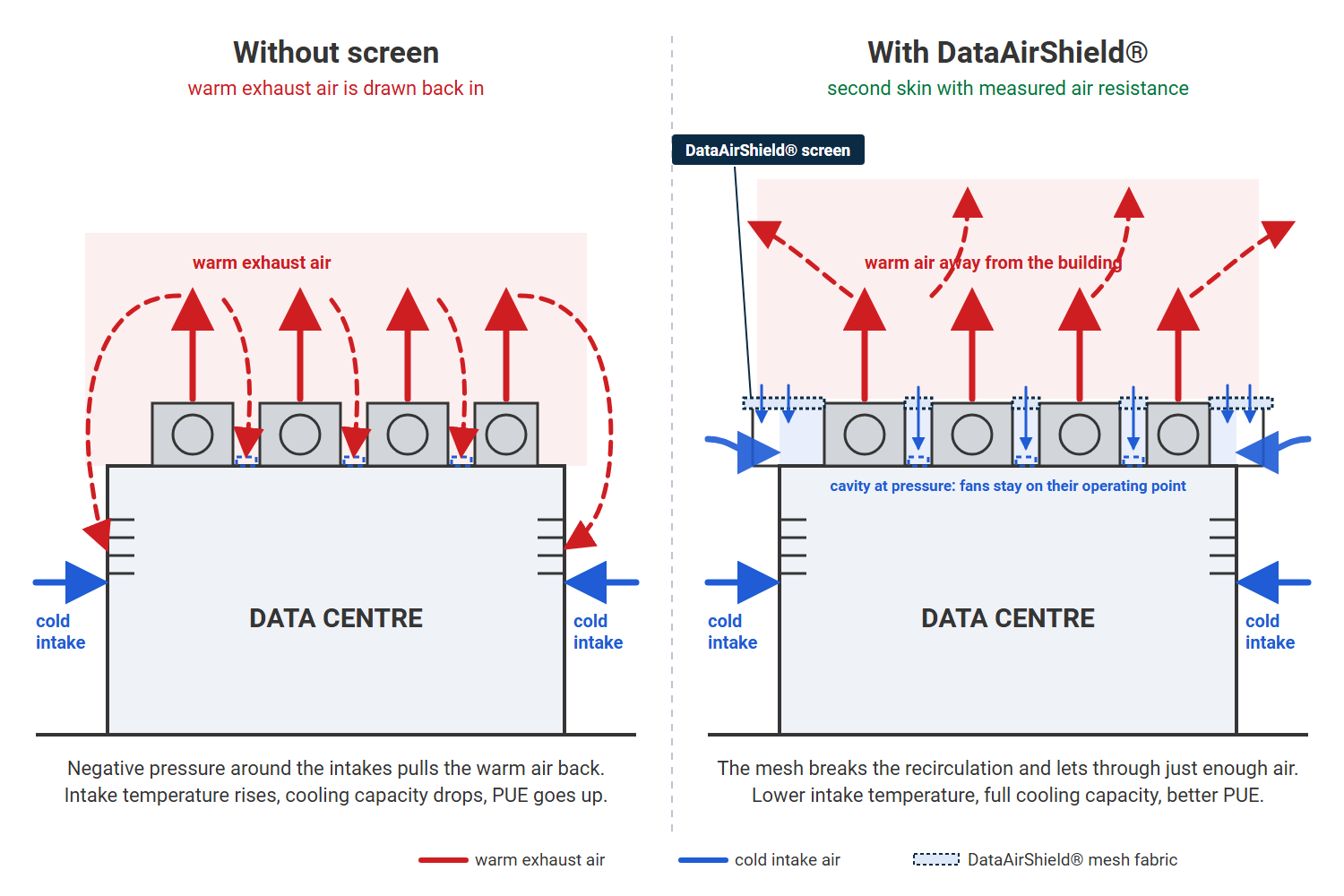
A data centre draws in cold air through its side walls and through the cavity above the roof, moves it through the building and discharges the warmed air at the top. Around the intakes a negative pressure develops. That negative pressure pulls the warm exhaust air back along the roof and façade towards the intake openings. The intake air is therefore warmer than ambient and cooling capacity drops.
In practice: on hot days the chillers fall short of their design capacity, PUE rises and the plant is sized larger than it would need to be.
The solution: a second skin with the right resistance
A separation layer above the roof keeps the warm air away from the intakes. Intuitively you would make that layer closed. That fails: in the cavity between roof and screen the negative pressure becomes so high that the fans move off their operating point.
The optimum is a fabric with controlled air resistance: closed enough to break the recirculation, open enough to keep the cavity at pressure. That resistance is a material property that has to be measured, not derived from an openness percentage. That is why every DataAirShield® fabric type has its pressure loss determined to EN 13030. The project's CFD consultant can use the values directly.
What sets DataAirShield® apart
- Measured pressure loss. Three fabric types with measured ζ, Cv and CD values to EN 13030. Zoning per CFD zone is possible: tighter where recirculation is strongest, more open where cavity pressure is critical.
- A building element, not a machine accessory. The screens usually appear on the mechanical drawings next to the chillers, but they hang outside on the building. We design them for wind and snow to Eurocode and CEN/TS 19102 and provide the structural substantiation for the steel contractor.
- Fire safe to the standards. Fire class M2 (NF P92-503) and B1 (DIN 4102-1), with test certificates from accredited institutes.
- Biaxially tested per roll. Before production we test every roll of fabric biaxially, so that the fabric stress matches the calculation and the screens stay taut for years.
- Rain, snow and dirt pass through. The mesh lets water through, does not hold a snow pack and can be cleaned with water and a soft brush.
- Removable and replaceable. Each screen is held in a rail profile with stainless steel tension springs and can be taken out for chiller maintenance.
From specification to installation
- Specification and CFD. We supply the measured pressure-loss data of the fabric types as input for the project's CFD study. If no CFD party is on board yet, we can recommend a specialised partner.
- Engineering. Panel layout, stress calculation, spring and cable plan, connection details to the steel structure, structural substantiation.
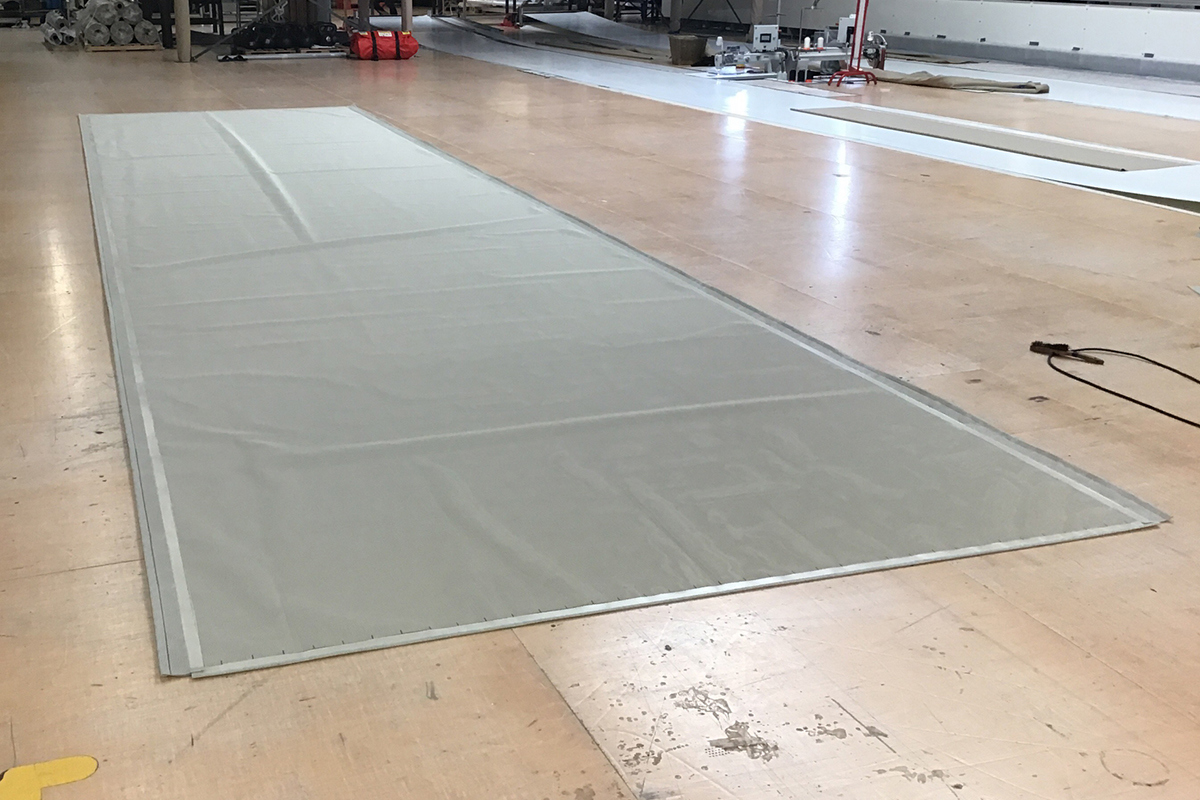
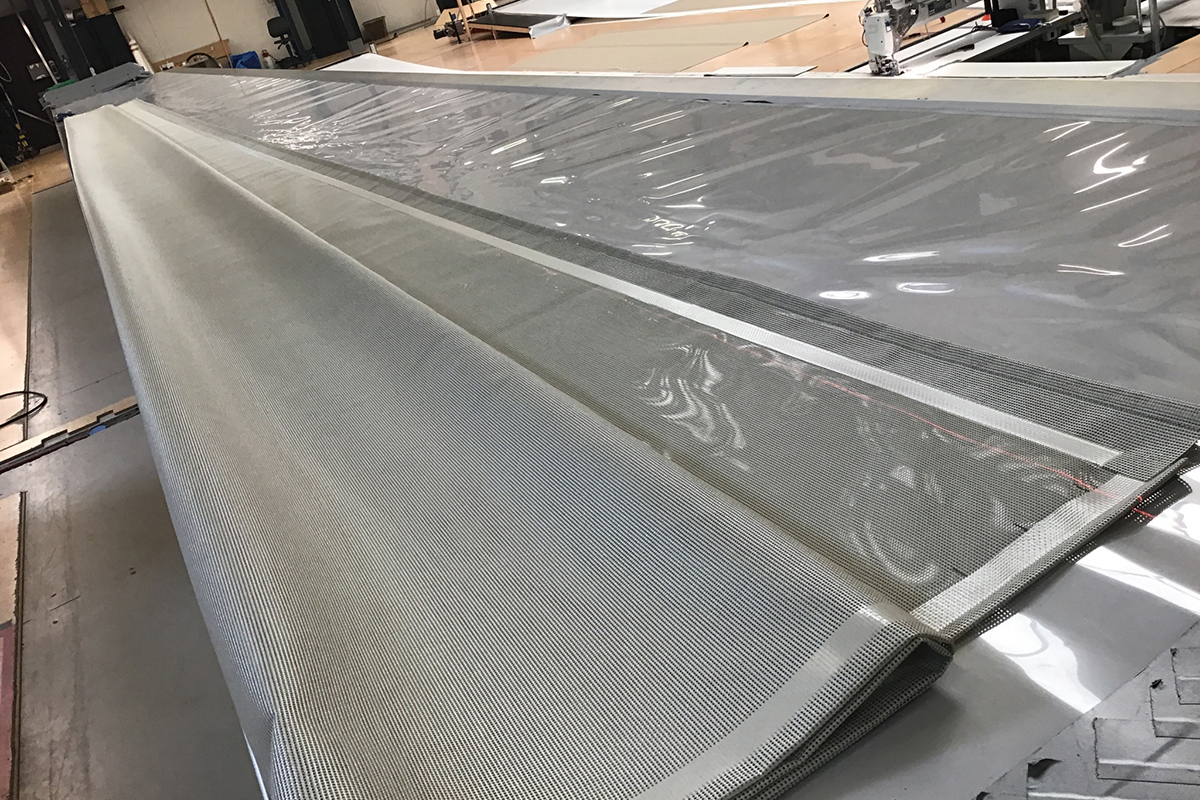
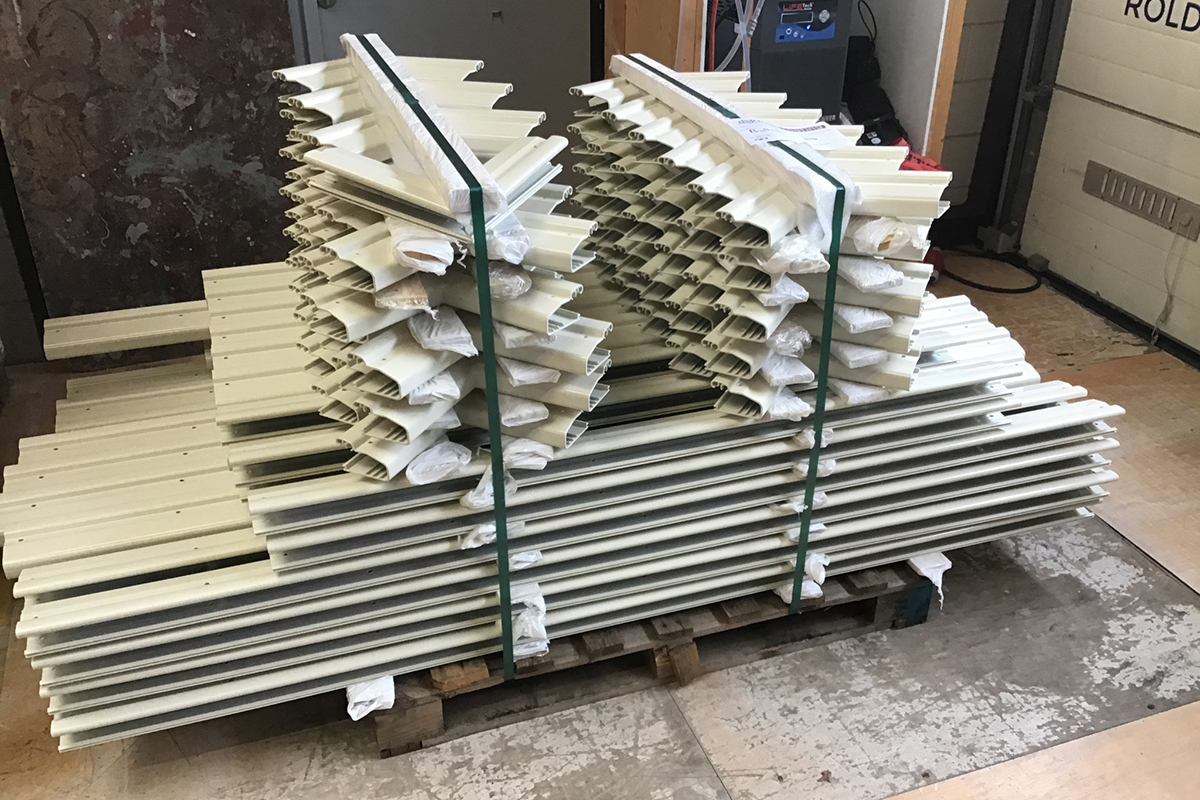
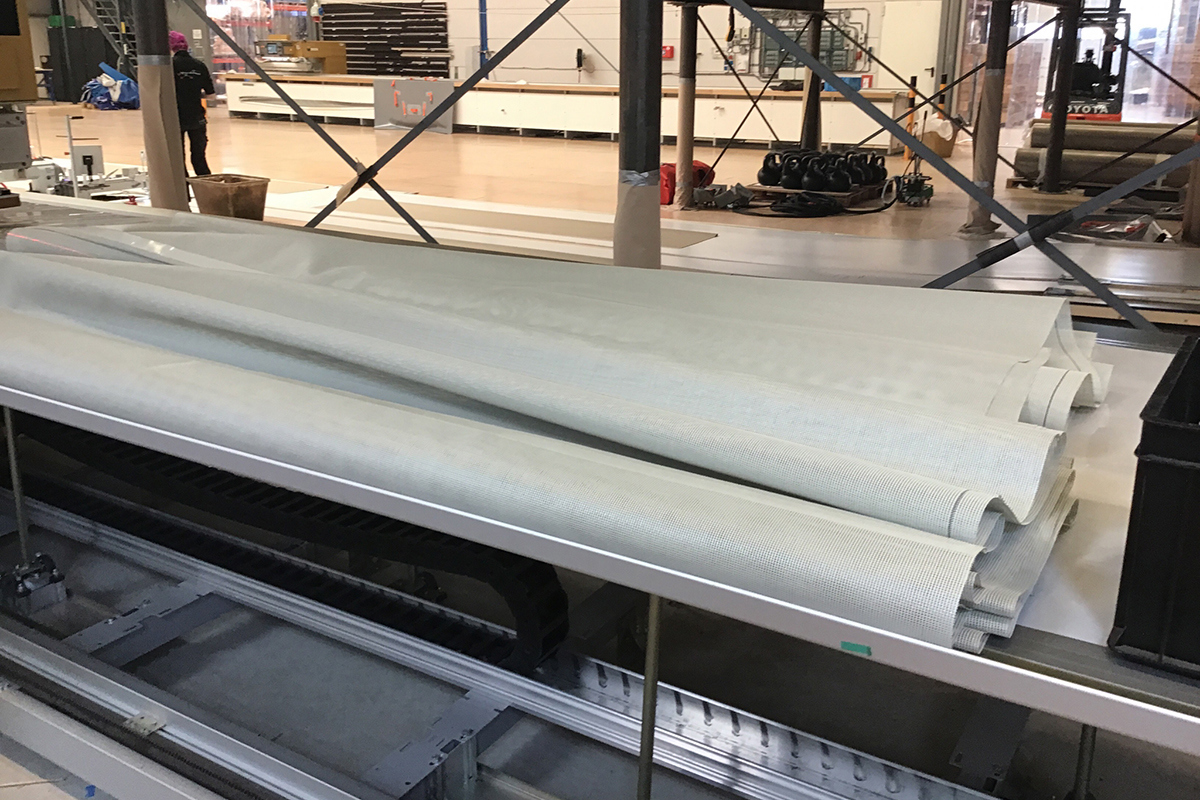
- Production in Duiven. High-frequency welded panels made to size, with keder, hem and stainless steel rod; all dimensions taken from the 3D model.
- Installation. Our own crews, on new and existing roofs and in live data centres, throughout Europe.
- Documentation and aftercare. Installation manual, maintenance manual, logbook and warranty declaration, ready for submittal. Annual inspection on request.
References
- Hyperscale data centre, Munich (2026). Approximately 235 recirculation screens, over 2,300 m² of DataAirShield05, engineered to CEN/TS 19102, with complete submittal documentation for the M&E contractor.
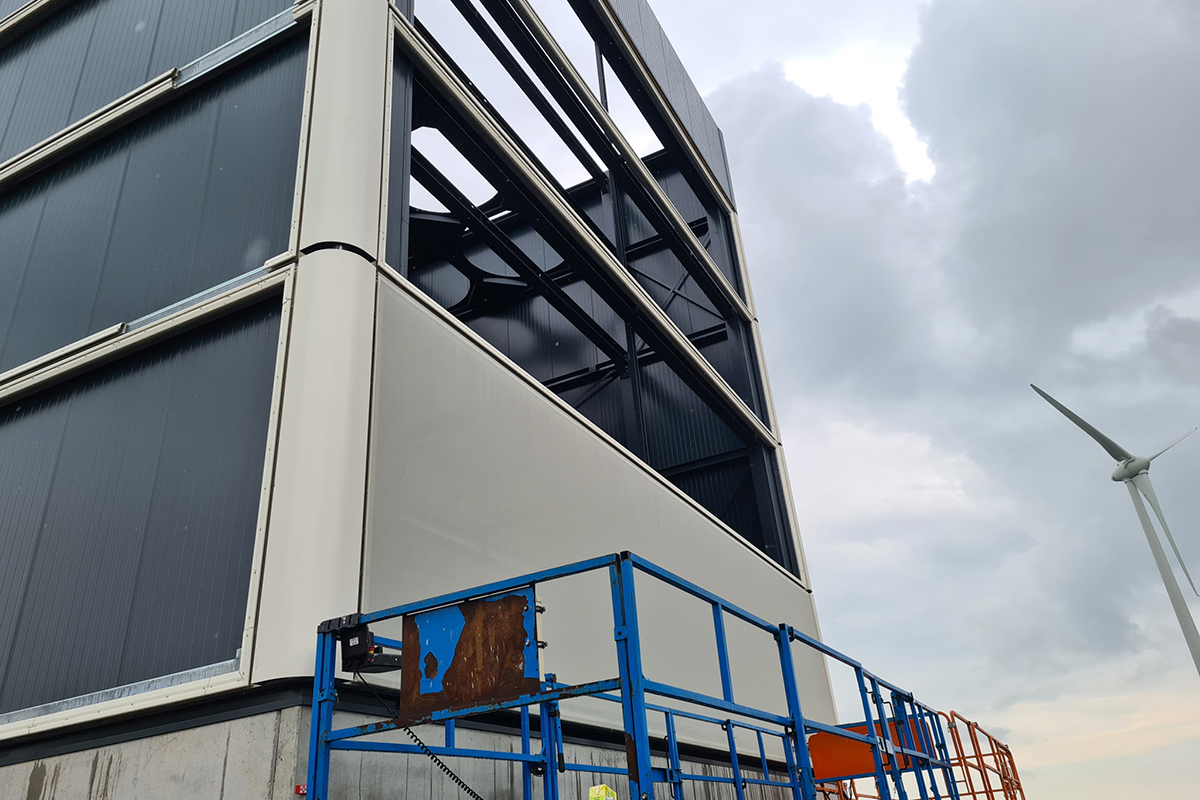
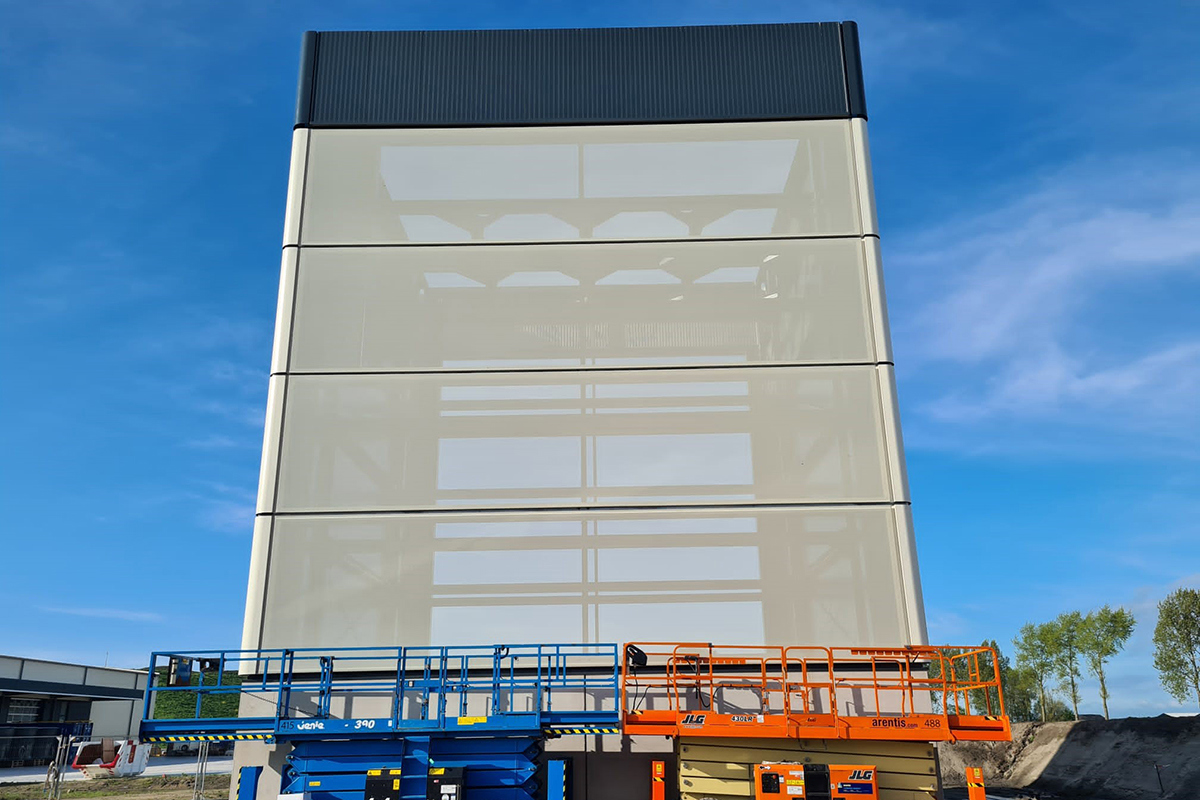
- Textile façade for a CO₂ reduction plant, Alkmaar (2023). Permeable mesh façade around a carbon-capture installation: the same principle, the same tensioning technique.
- Mesh screens outdoors since 2006 and 2013. Printed mesh screens in Waddinxveen (2006) and a mesh façade in Uden (2013) are still in place after twenty and thirteen years.
FAQs
Why not a closed roof above the chillers?
A closed surface raises the cavity pressure too far; the fans move off their operating point and cooling capacity drops. A fabric with measured, controlled resistance breaks the recirculation and keeps the cavity at pressure.
Which fabric type do I need?
That follows from the CFD study and the maximum permissible pressure loss. In most projects DataAirShield05 is the base; 04 and 28 are used to make zones tighter or more open.
Is the fabric fire safe?
Yes: fire class M2 to NF P92-503 and B1 to DIN 4102-1, with certificates from accredited test institutes.
How long does it last?
We give a ten-year written warranty. Comparable mesh fabric of ours has been outdoors for twenty years.
Can the screens go on an existing roof?
Yes. We connect to the existing steel structure or supply the connection details to the steel contractor.
What do you need for a budget price?
Layout of the chiller area, air volume per chiller, maximum permissible pressure loss, whether the screens must be removable, and the fire, wind and snow requirements of the site.
Questions?
Do you have questions or want more information? Please feel free to contact us. Call us at +31 (0)316-250830. But even easier: fill out the contact form below directly. We will contact you as soon as possible!
