


Flexible containment system for sand-laden seepage water
 Contact form
 +31 (0)316-250830
 Buitink Technology
During high water levels, seepage water can flow under or through a dyke, quay or flood defence to ground level. In some cases, this water carries sand with it. These so-called sand-carrying seepage wells are an important warning sign, because sand transport can lead to internal erosion and weakening of the flood defence.
Casing is a tried and tested measure for allowing a controlled outflow, allowing sand to settle and enabling the situation to be observed and assessed safely.
Why caskets may be necessary
Sand-carrying seepage often occurs during periods of high water, when the groundwater pressure beneath a flood defence increases. The upward flow can carry sand, indicating a risk of piping.
Boxing is used to slow down the flow, reduce sand transport and limit damage to the ground level and flood defences. It also makes it possible to monitor the development of the well and gain time for additional measures.
Flexible drip tray from Buitink Technology
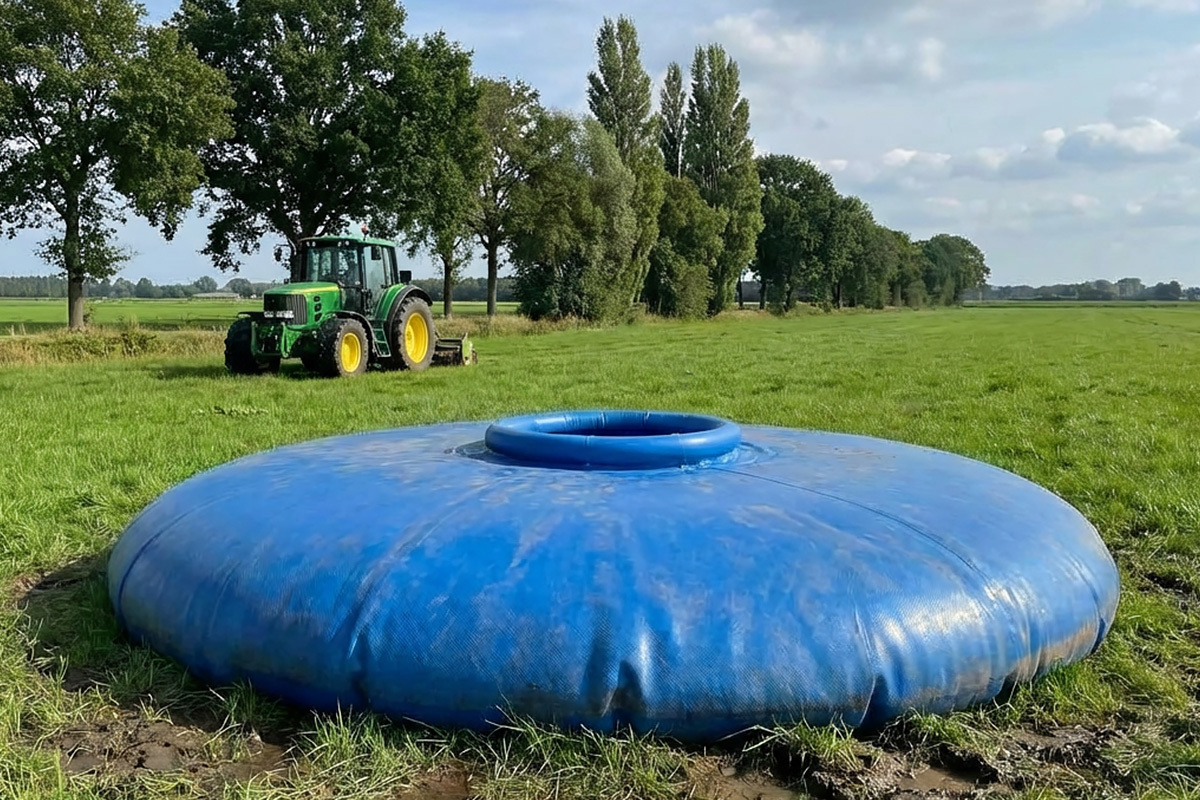
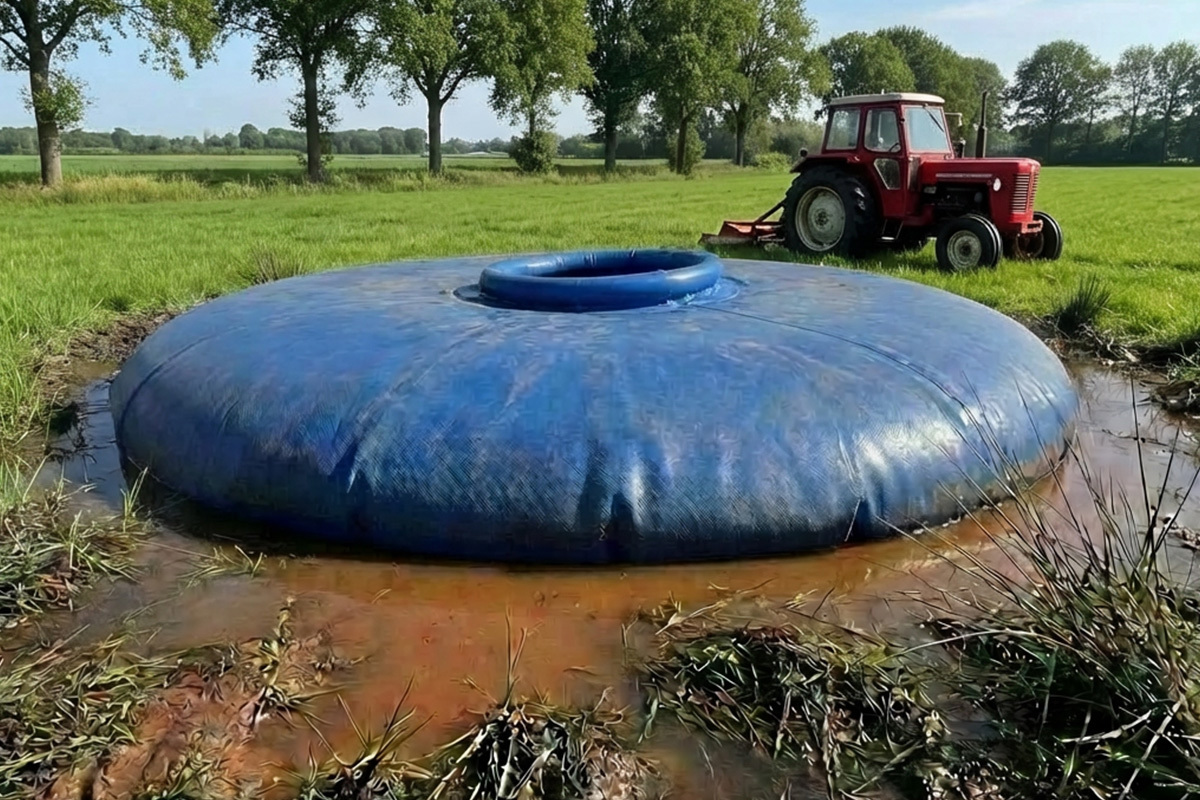
Buitink Technology has developed a flexible, lightweight alternative to traditional cofferdams made of wooden structures and large quantities of sandbags. The system consists of a teardrop-shaped flexible reservoir with an opening in the bottom and a floating edge.
The design enables rapid installation and is suitable for temporary use in emergencies and flood situations.
Technical operation
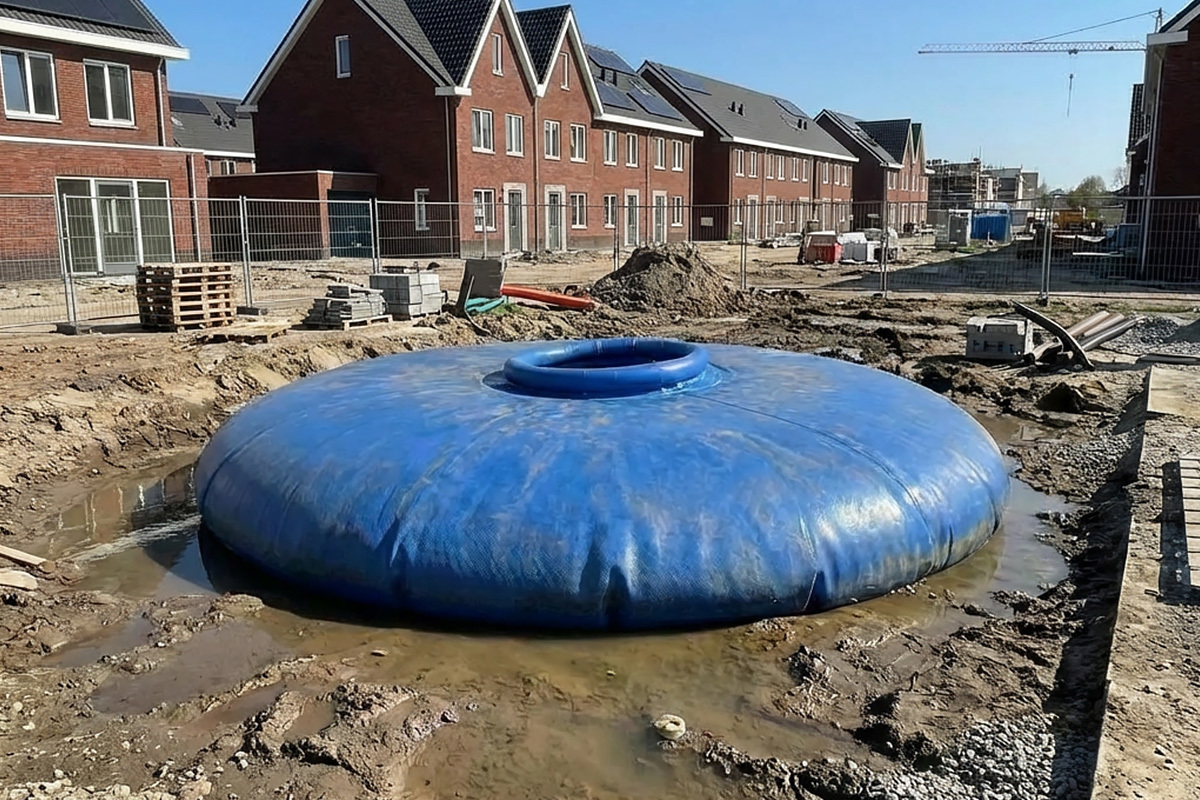
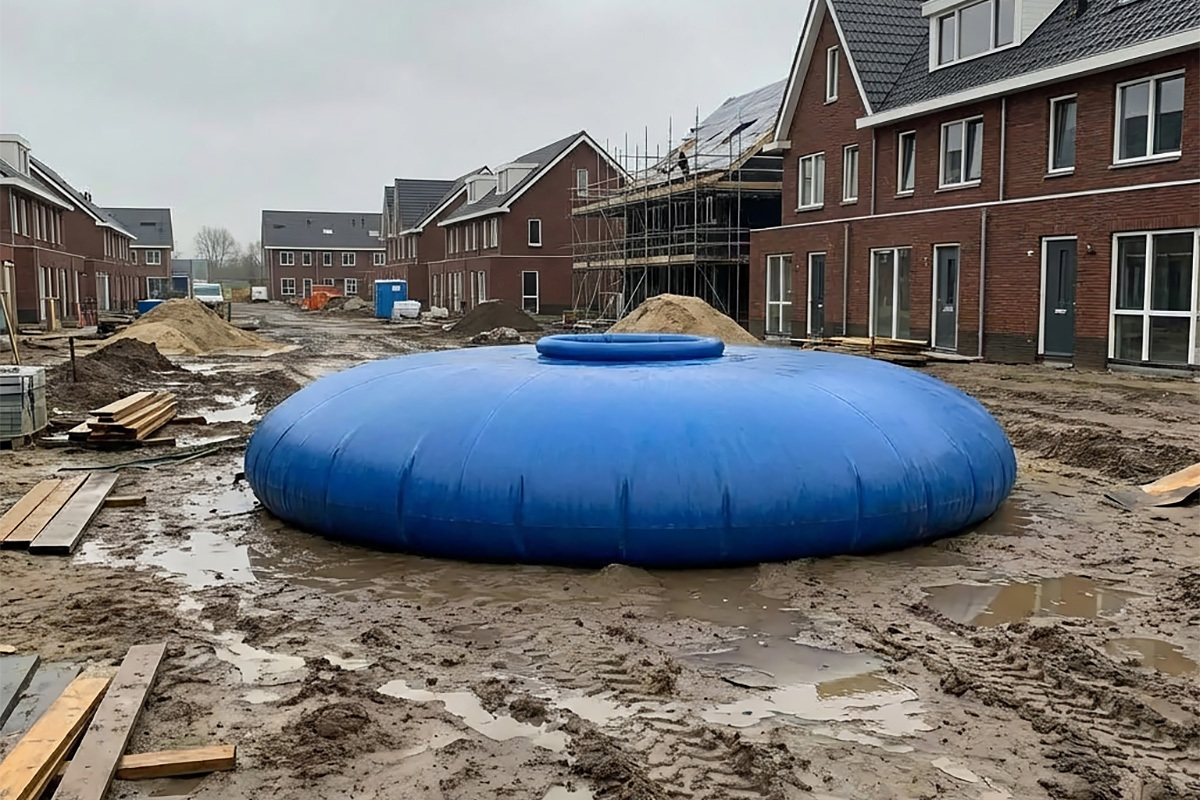
After installation over or around the well, the seepage water flows into the reservoir through the opening in the bottom. The system fills automatically due to the presence of seepage flow.
As the water level in the reservoir rises, the weight increases and the cofferdam becomes more stable. The weight of the water provides natural anchoring at ground level, similar to the principle of flexible flood defences.
The floating edge forms a stable barrier against the ground level and prevents uncontrolled outflow.
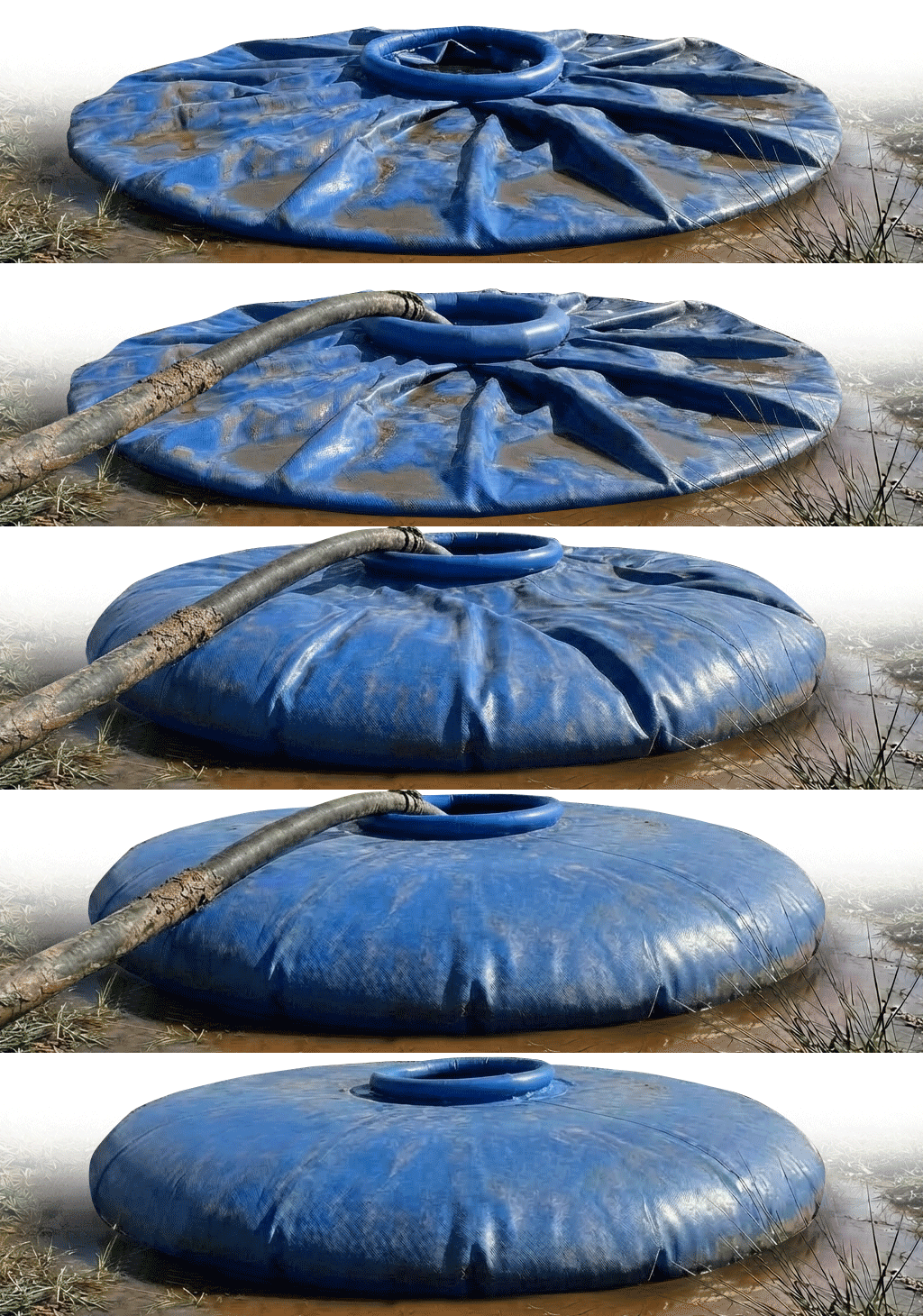
Image: Flexible cofferdam in unfolded state around a seepage
When is casketing useful or necessary?
Coffining is used in situations such as:
- Cloudy seepage water or visible sand deposits
- Increase in seepage flow or the emergence of new wells
- A 'boiling' effect or active sand transport
- Need for calm in the flow to allow sand to settle
- Need to limit damage and gain time for analysis
By carefully controlling the framing, seepage water is prevented from flowing freely across the ground level and continuously carrying away material.
Advantages of the flexible casing system
- Quickly deployable without heavy equipment
- Self-filling due to the presence of seepage water
- Increased stability due to water weight
- Limited logistics compared to sandbags and timber
- Gentle flow allowing sand to settle
- Reusable after cleaning and inspection
- Available in customised sizes for different situations
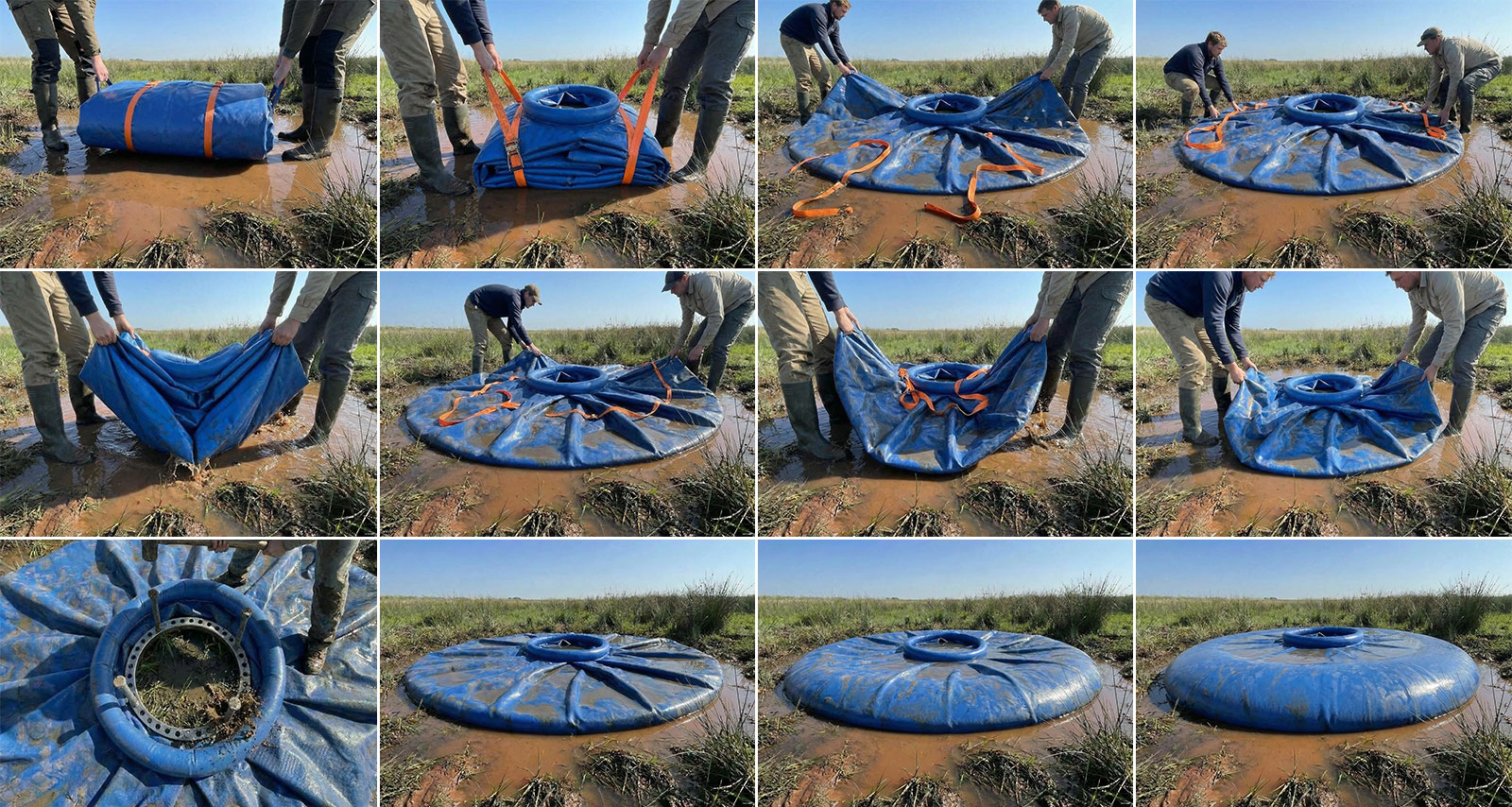
Image: Step-by-step plan for rolling out and installing flexible cofferdam in case of seepage
Practical application
The deployment will proceed as follows:
- Placing the reservoir over or around the well
- Automatic inflow of seepage water through the bottom opening
- Stabilisation through increasing water weight
- Monitoring of clarity, sand production and behaviour of the well
If necessary, the system can be combined with additional measures or drainage, in accordance with the applicable emergency or flood protocol.
Customisation and designs
The flexible formwork is available in various diameters, heights and volumes. Depending on the application, the following options are available, among others:
- Overflow or controlled drainage
- Reinforced zones for soft or rough surfaces
- Lifting and handling straps
- Level markings and measuring points
- Transport and storage bag with repair kit
Sample implementation
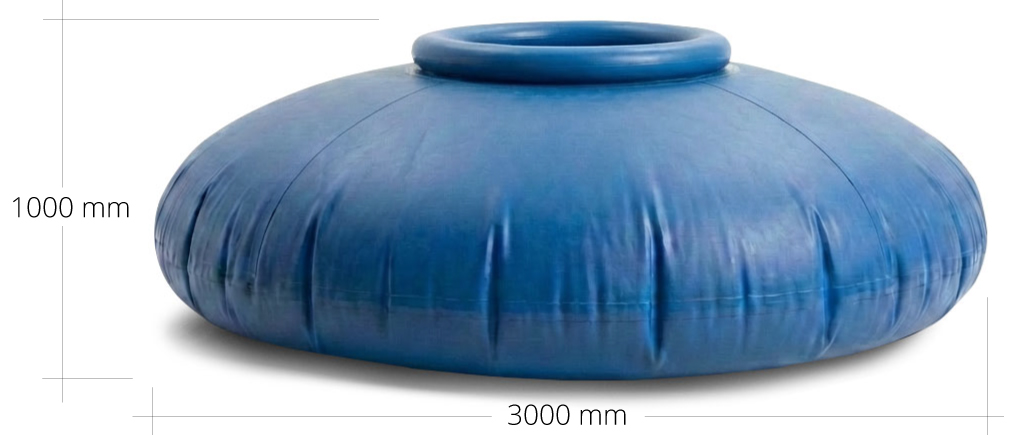
Image: Flexible formwork with a diameter of 3000 mm and a height of 1000 mm
FAQs
What is the purpose of a flexible formwork when tormenting?
The aim is to allow seepage water to flow out in a controlled manner, allow sand to settle and monitor the situation safely, thereby limiting risks to the flood defences.
When is incarceration necessary?
Coffering is necessary when seepage water carries sand, the flow rate increases, or when there is a possibility of internal erosion beneath a flood defence.
How is this system different from traditional framing?
The flexible system replaces wooden crates and large quantities of sandbags with a lightweight, rapidly deployable reservoir that stabilises itself with water weight.
Is a pump needed to fill the system?
In most cases, no. The reservoir fills automatically due to the seepage flow present.
Can the system be reused?
Yes, after use, the system can be cleaned, dried and reused in the next situation.
Is customisation possible for specific locations?
Yes, the casing is tailored to the flow rate, terrain, available space and desired capacity.
Questions?
Do you have questions or want more information? Please feel free to contact us. Call us at +31 (0)316-250830. But even easier: fill out the contact form below directly. We will contact you as soon as possible!
