

Types of mobile inflatable noise barriers & noise reduction
 Contact form
 +31 (0)316-250830
 Buitink Technology
This page provides an overview of the standard types of mobile inflatable noise barriers and their acoustic performance. Based on this information, an initial selection can be made of the required panel and the expected noise reduction.
The type designations V4 and V6 refer to the internal panel configuration and form the structural basis for the various variants. V4 configurations are primarily designed for lightweight applications. V6 configurations are structurally heavier for applications with stricter requirements for low-frequency noise reduction.
How is noise reduction determined?
The effectiveness of a noise barrier is determined by a combination of:
- screen height and positioning
- distance between source and receiver
- sound insulation of the screen itself
This page specifically discusses the sound insulation properties of the inflatable panels.
Measurement method and standards
The sound insulation of the standard configurations has been determined by means of laboratory measurements.
The measurements were carried out in accordance with:
- NEN-EN-ISO 140-3 – Laboratory measurement of airborne sound insulation of building elements
The results of these measurements form the basis for the specified Rw, C and Ctr values.
Reports of the measurements
Water and membranes as sound insulation
Acoustic parameters Rw, C and Ctr
The sound insulation of the panels is expressed in the following parameters:
- Rw – weighted airborne sound insulation
- C – correction term for mid and high frequencies
- Ctr – correction term for low frequencies (traffic, machinery, music)
In many practical situations, the value Rw + Ctr determines the effectiveness of the noise barrier.
Standard types of mobile inflatable noise barriers
Buitink Technology has developed and tested a number of standard configurations of inflatable sound panels. These types form a proven basis for many temporary applications and differ in terms of mass, construction and acoustic performance.
The type designations V4 and V6 refer to the internal panel configuration of the inflatable noise barriers. These designations describe the structural composition of the panel and form the basis for further assembly and acoustic performance.
Type BUI-V4-200-3
Configuration with two PVC membranes and a 200 mm air cavity. Overpressure approx. 100 mbar.
| Weight approx.: | 3 kg/m² |
| Rw (C; Ctr): | 20 (-1; -2) dB |
| Rw + Ctr: | 18 dB |

Indicative applications:
- situations with limited noise requirements
- focus on mid and high frequencies
- very light and compact transport
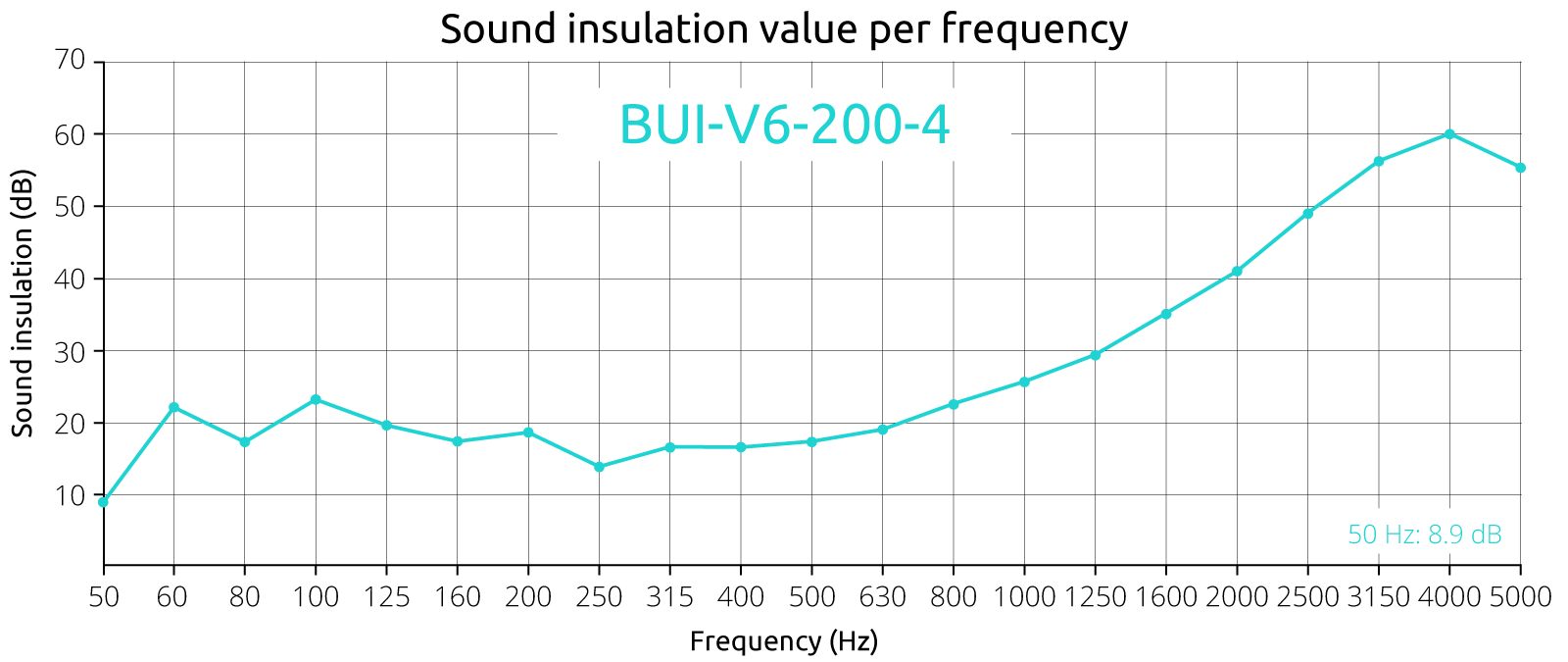
Type BUI-V6-200-4
V6 basic configuration with a 1.3 mm PVC mass layer on one side.
| Weight approx.: | 4 kg/m² |
| Rw (C; Ctr): | 24 (0; -3) dB |
| Rw + Ctr: | 21 dB |
Indicative applications:
- temporary construction work
- road and urban works
- temporary technical installations
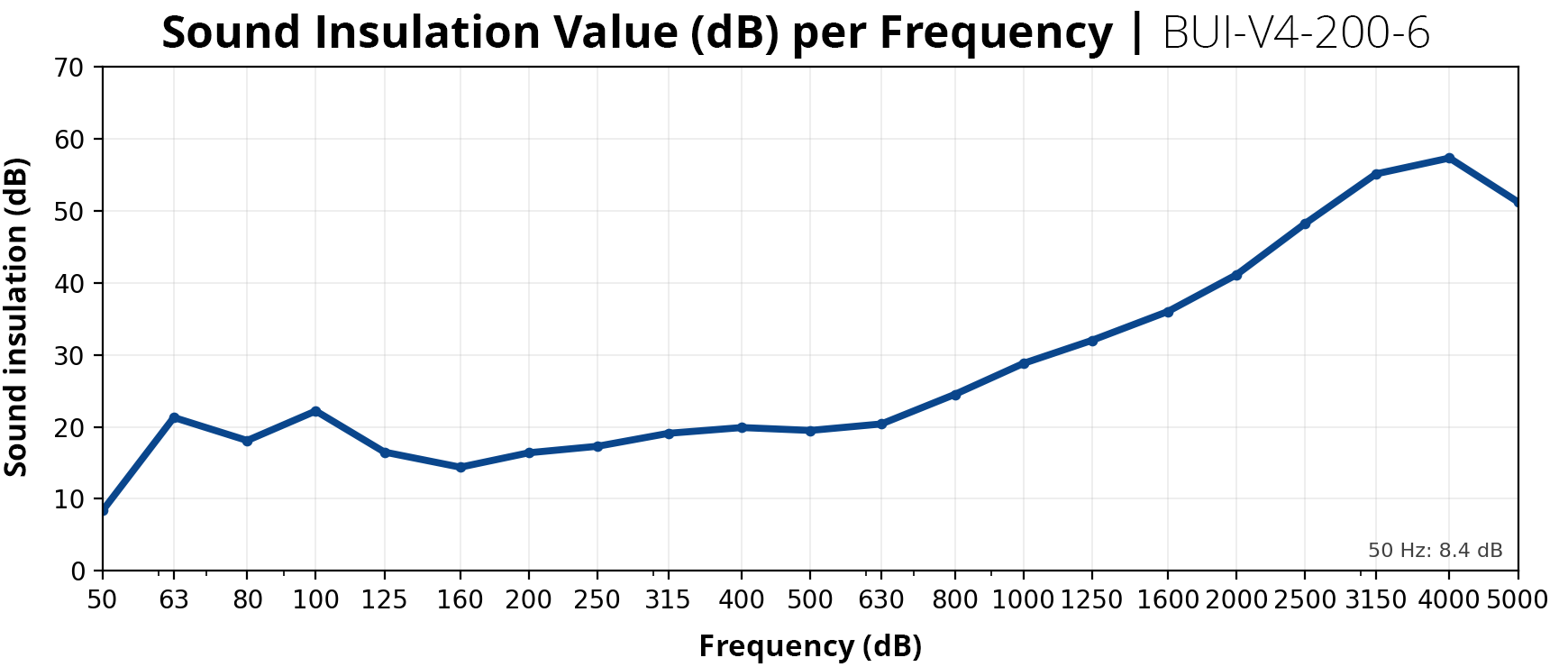
Type BUI-V4-200-6
Basic V4 configuration with an extra PVC mass layer on one side and an absorbent wool layer on the other.
| Weight approx.: | 6 kg/m² |
| Rw (C; Ctr): | 26 (-1; -3) dB |
| Rw + Ctr: | 23 dB |
Indicative applications:
- temporary construction situations
- logistics applications
- limited low-frequency component
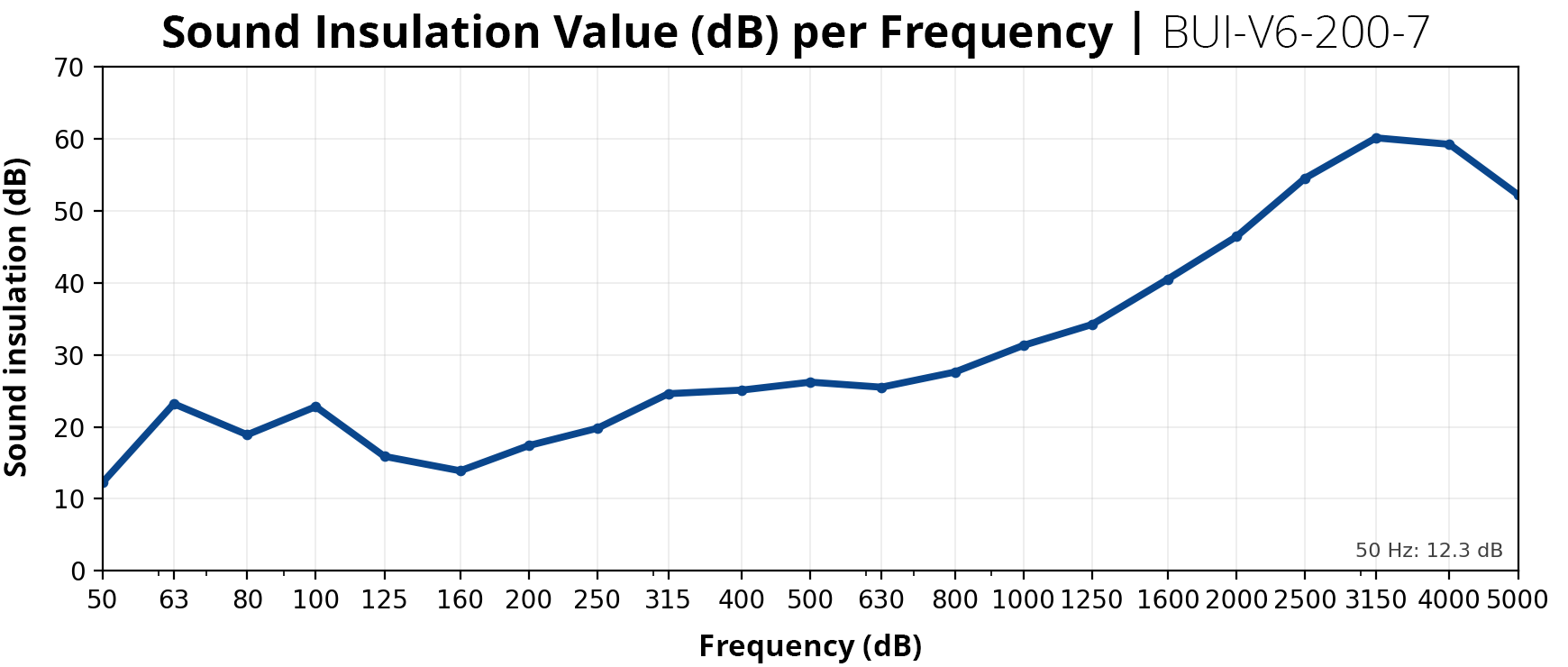
Type BUI-V6-200-7
Configuration with extra membrane reinforcement for improved insulation while maintaining mobility.
| Weight approx.: | 7 kg/m² |
| Rw (C; Ctr): | 30 (-1; -4) dB |
| Rw + Ctr: | 26 dB |
Indicative applications:
- construction sites
- railway-related works
- balance between mobility and performance
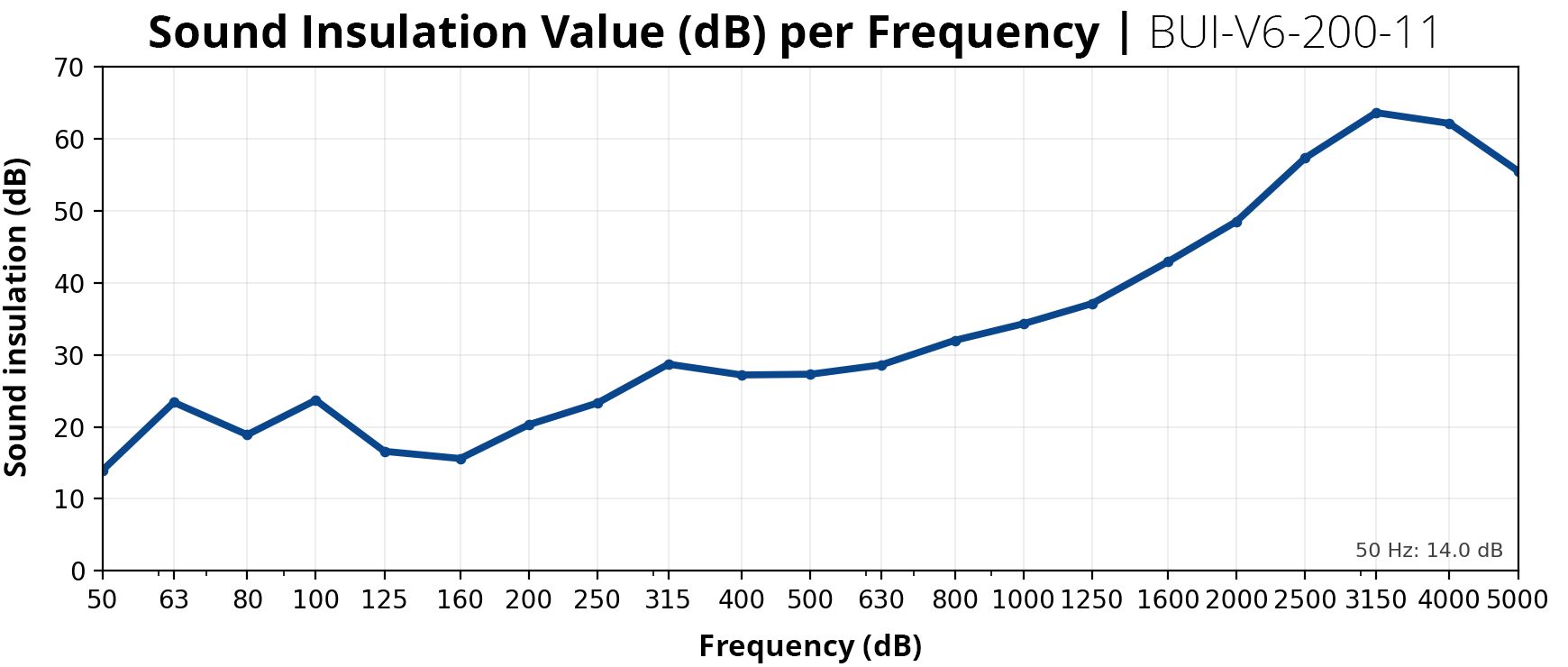
Type BUI-V6-200-11
Configuration with increased mass due to extra PVC layers on both sides.
| Weight approx.: | 11 kg/m² |
| Rw (C; Ctr): | 33 (-1; -5) dB |
| Rw + Ctr: | 28 dB |
Indicative applications:
- higher requirements for low-frequency reduction
- temporary industrial installations
- machines with a broad frequency spectrum
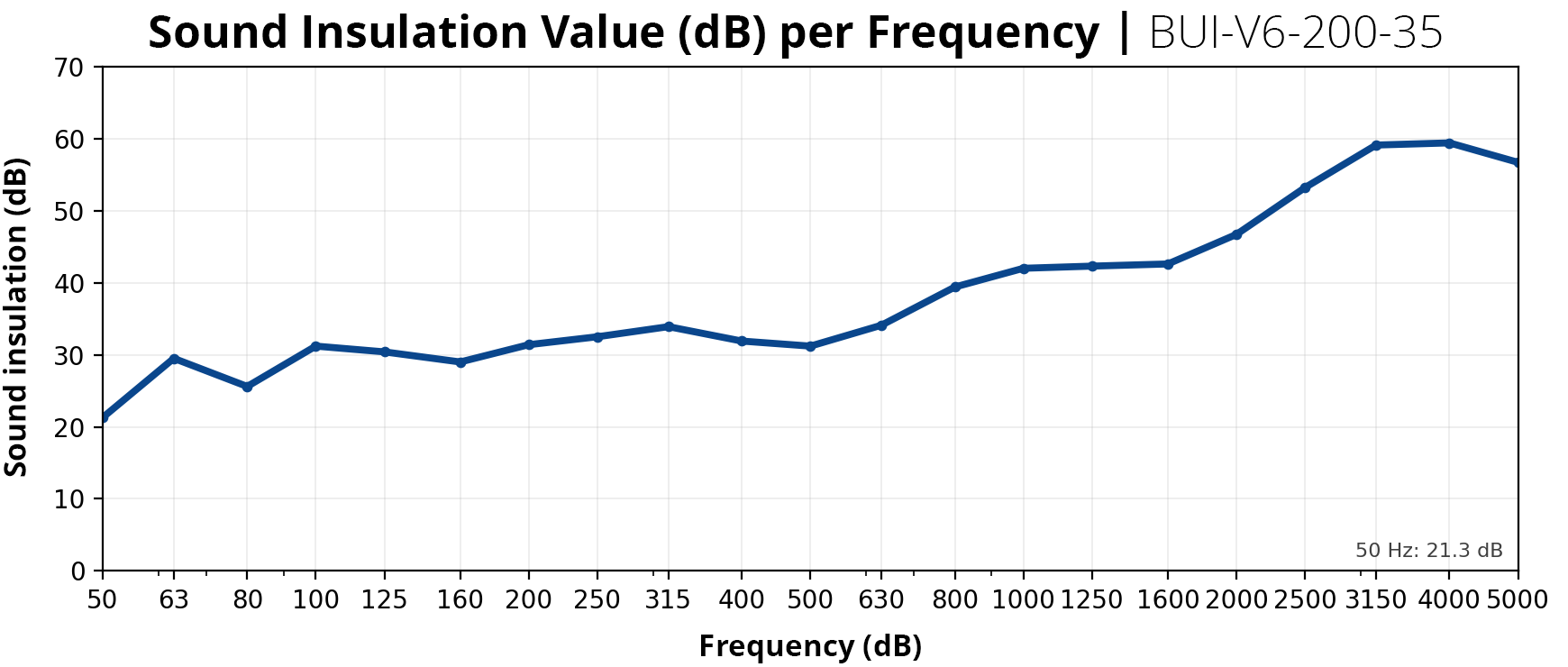
Type BUI-V6-200-35
Configuration with water-filled mass layer on one side for improved low-frequency insulation.
| Weight approx.: | 35 kg/m² |
| Rw (C; Ctr): | 39 (-1; -3) dB |
| Rw + Ctr: | 36 dB |
Indicative applications:
- heavy construction machinery
- industrial applications
- situations with dominant low frequencies
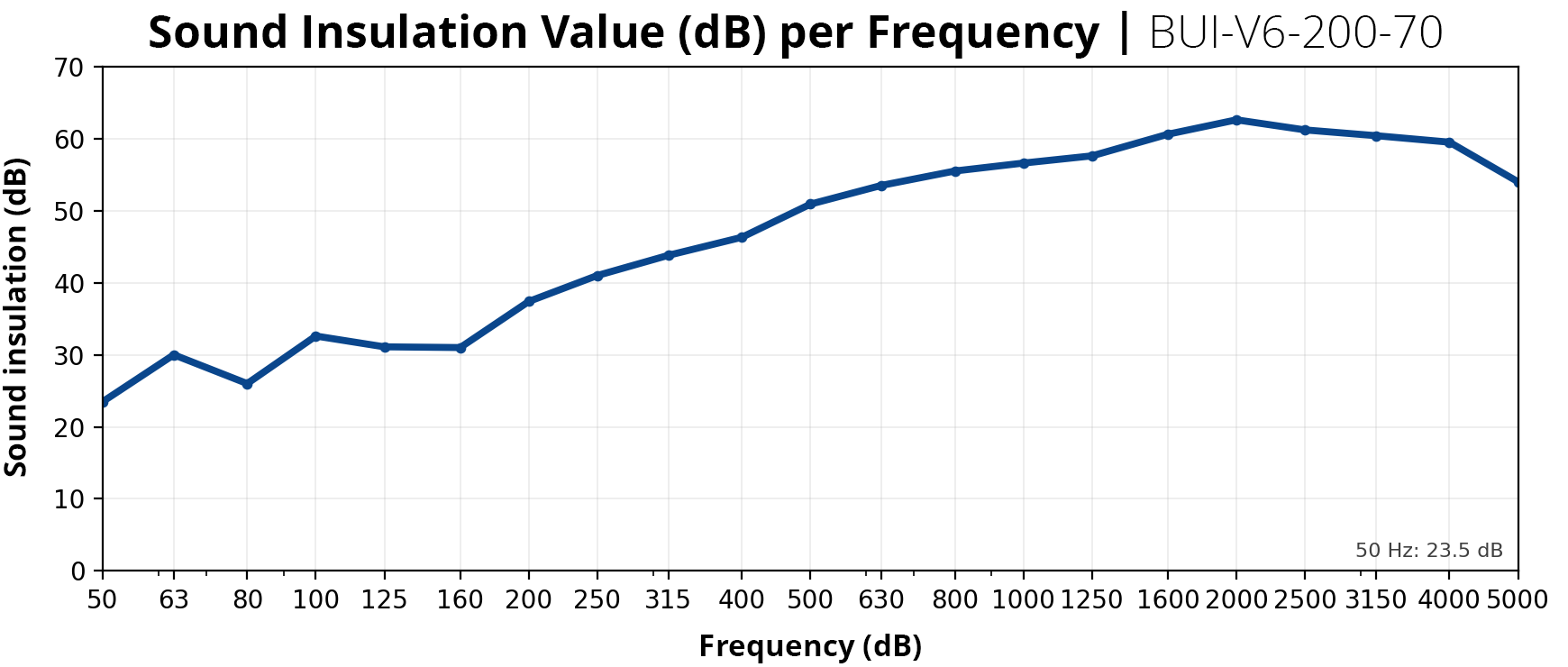
Type BUI-V6-200-70
Configuration with water-filled mass layers on both sides for maximum sound insulation.
| Weight approx.: | 70 kg/m² |
| Rw (C; Ctr): | 52 (-3; -8) dB |
| Rw + Ctr: | 44 dB |
Indicative applications:
- very strict noise standards
- festivals and events
- urban situations with sensitive receivers
Comparison of standard panel types
The table below provides a brief overview of the standard panel types.
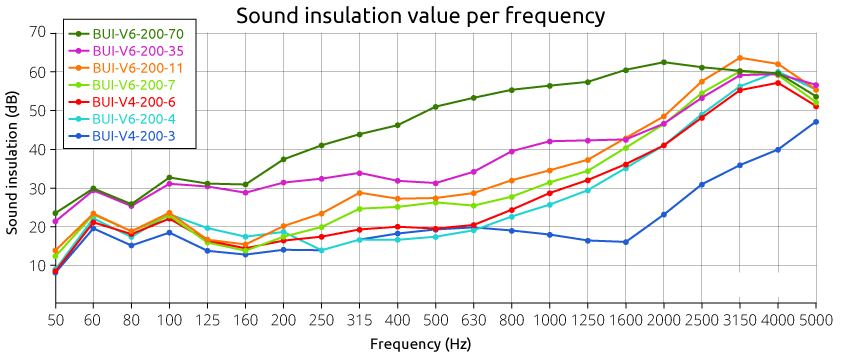
An overview of the sound insulation value per frequency for the various inflatable mobile sound barriers as a PDF.
Selecting the right type
The choice of the right type of panel depends on the project and is determined by:
- the sound spectrum of the source
- the desired noise reduction
- the available space and screen height
- the positioning of the screen
For application examples per sector, please refer to the page:
The choice of the right type of panel always depends on the project situation, the sound spectrum of the source and the applicable requirements. In many cases, a good initial selection can be made based on the above information.
Frequently asked questions
Frequently asked questions about mobile inflatable noise barriers:
Questions?
Do you have questions or want more information? Please feel free to contact us. Call us at +31 (0)316-250830. But even easier: fill out the contact form below directly. We will contact you as soon as possible!
