

Inflatable Rescue Cradle for Whale Rescue
 Contact form
 +31 (0)316-250830
 Buitink Technology
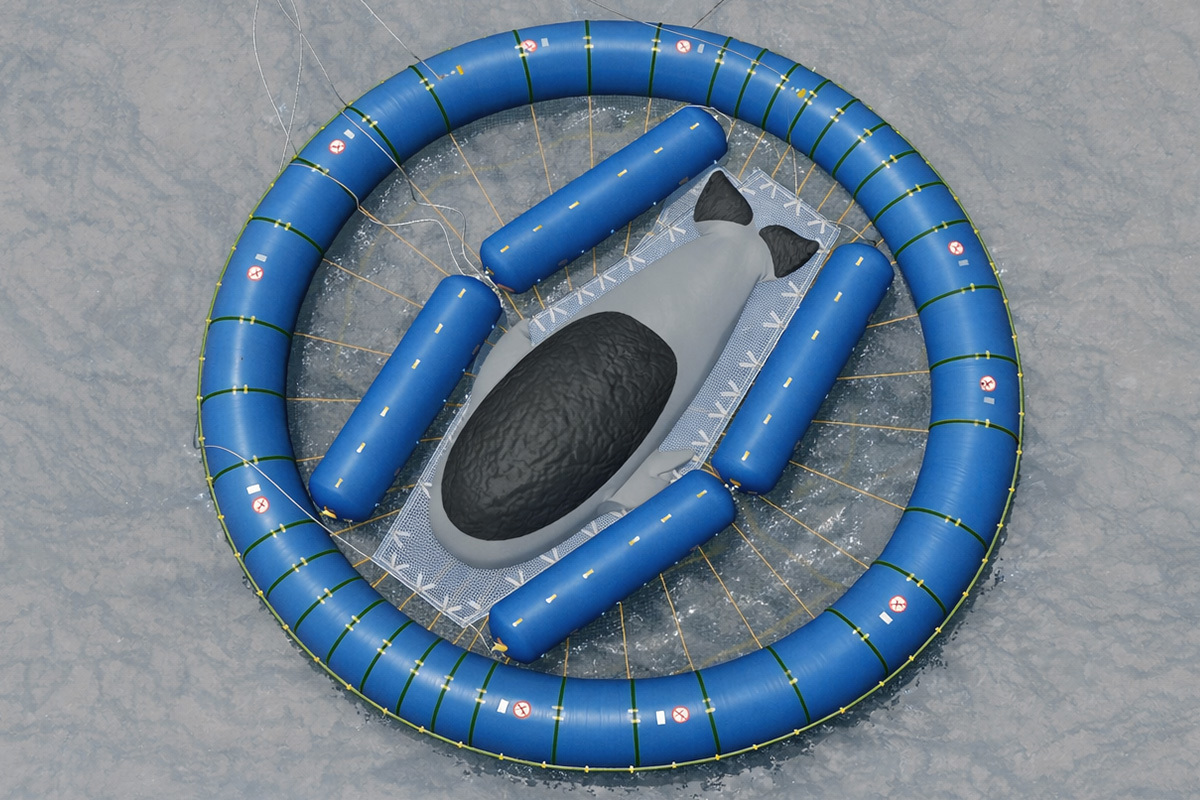
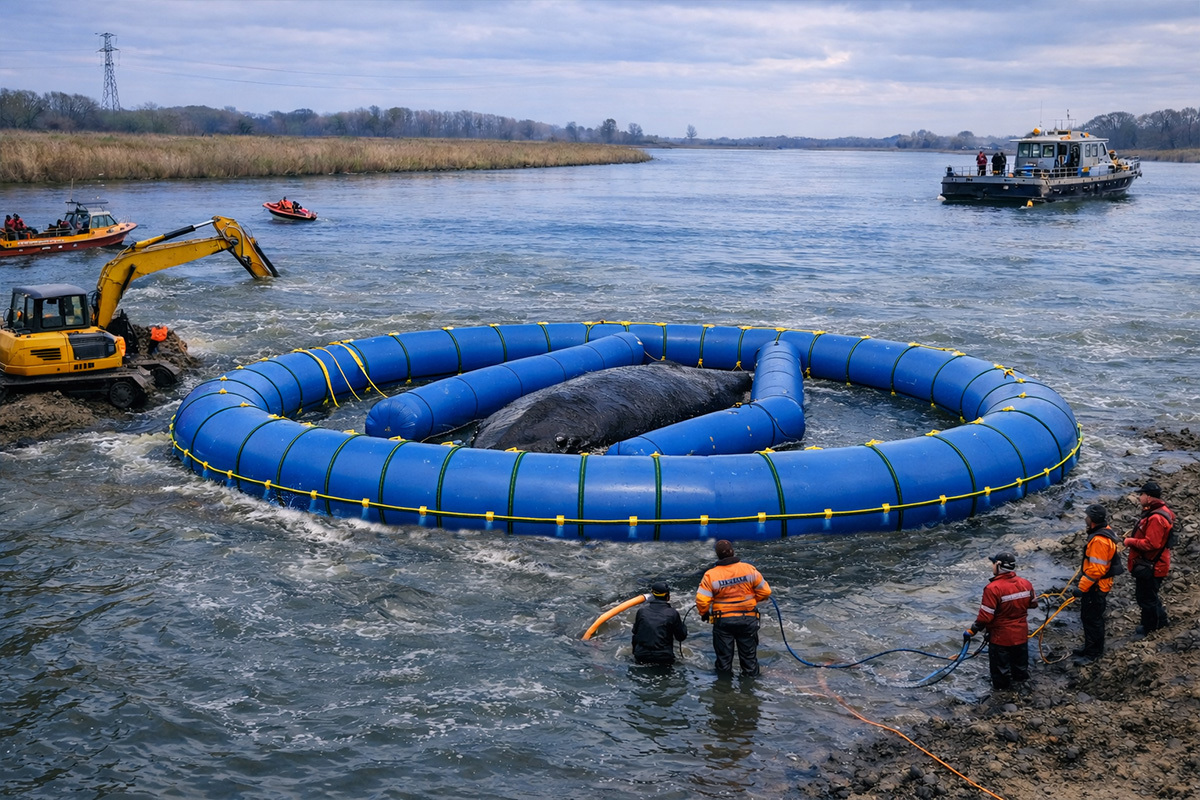
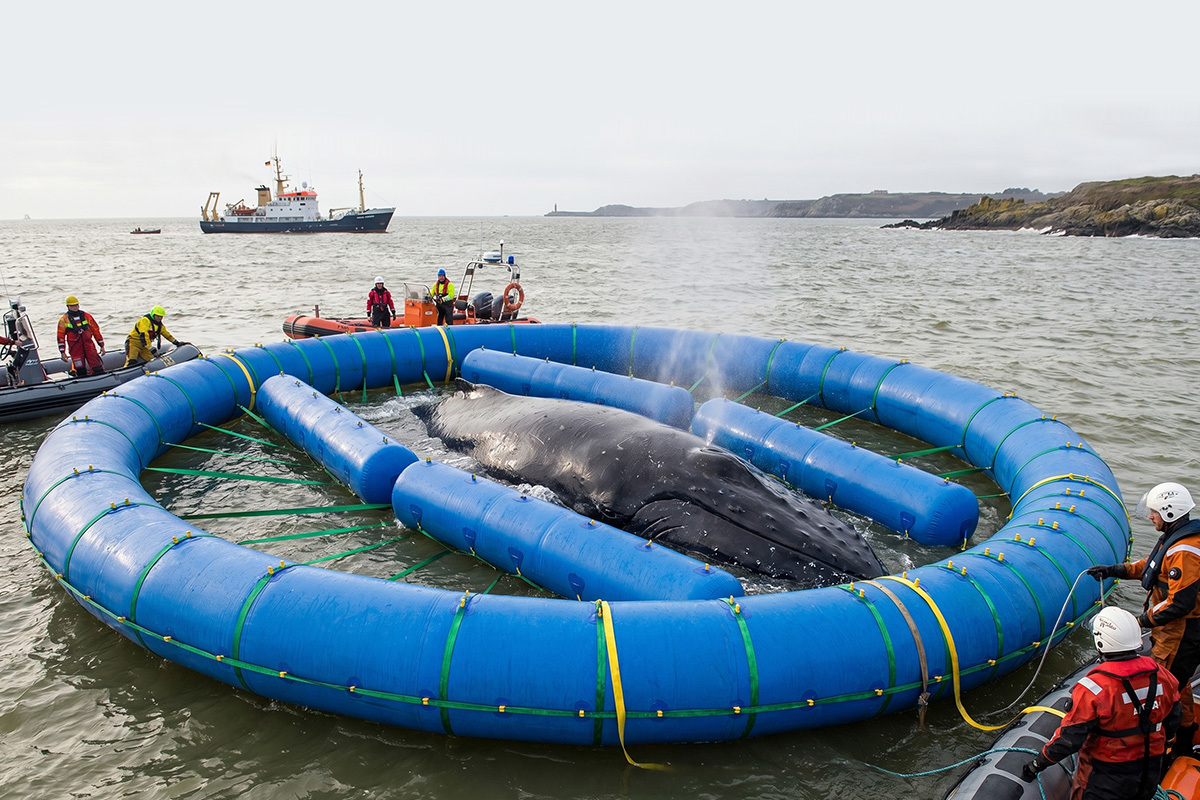
When a stranded whale or another large vulnerable load requires controlled support on water, stability matters more than lifting power alone. Buitink Technology developed this Inflatable Rescue Cradle concept as a custom-engineered floating support system that combines an inflatable outer donut, internal buoyancy elements and a central support membrane into one integrated operational platform.
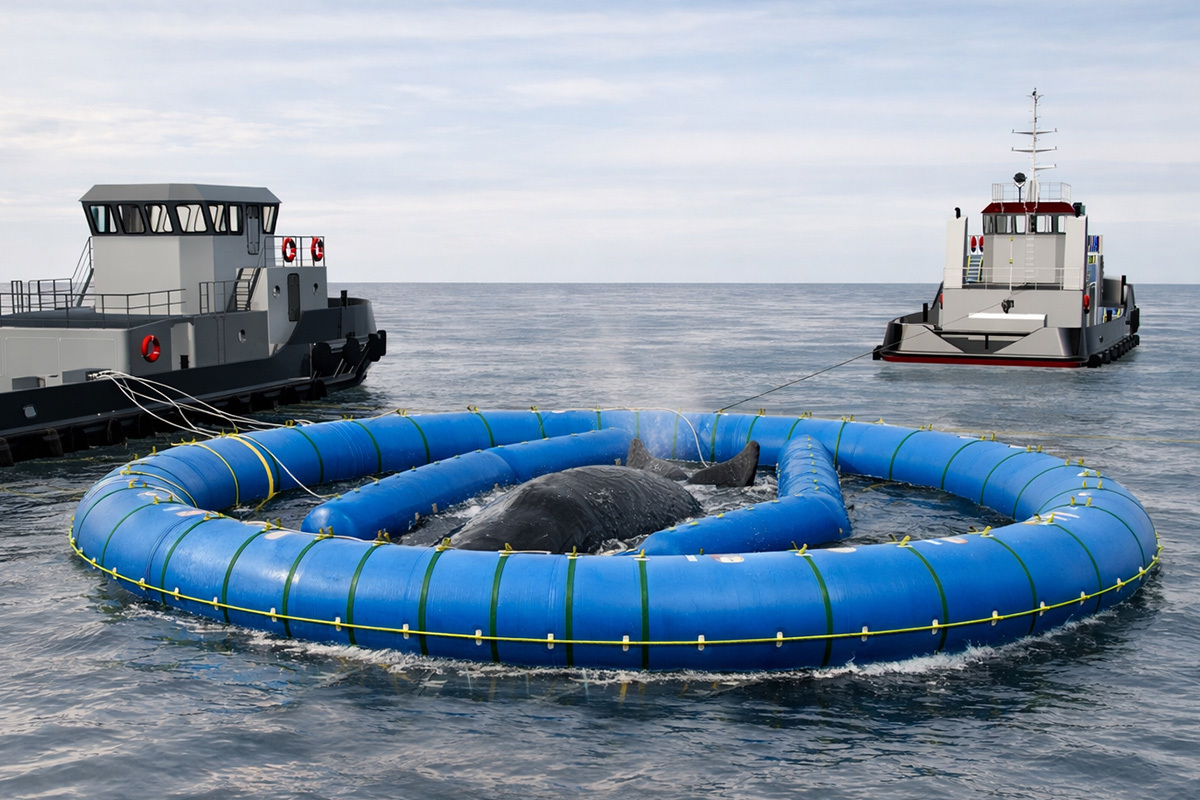
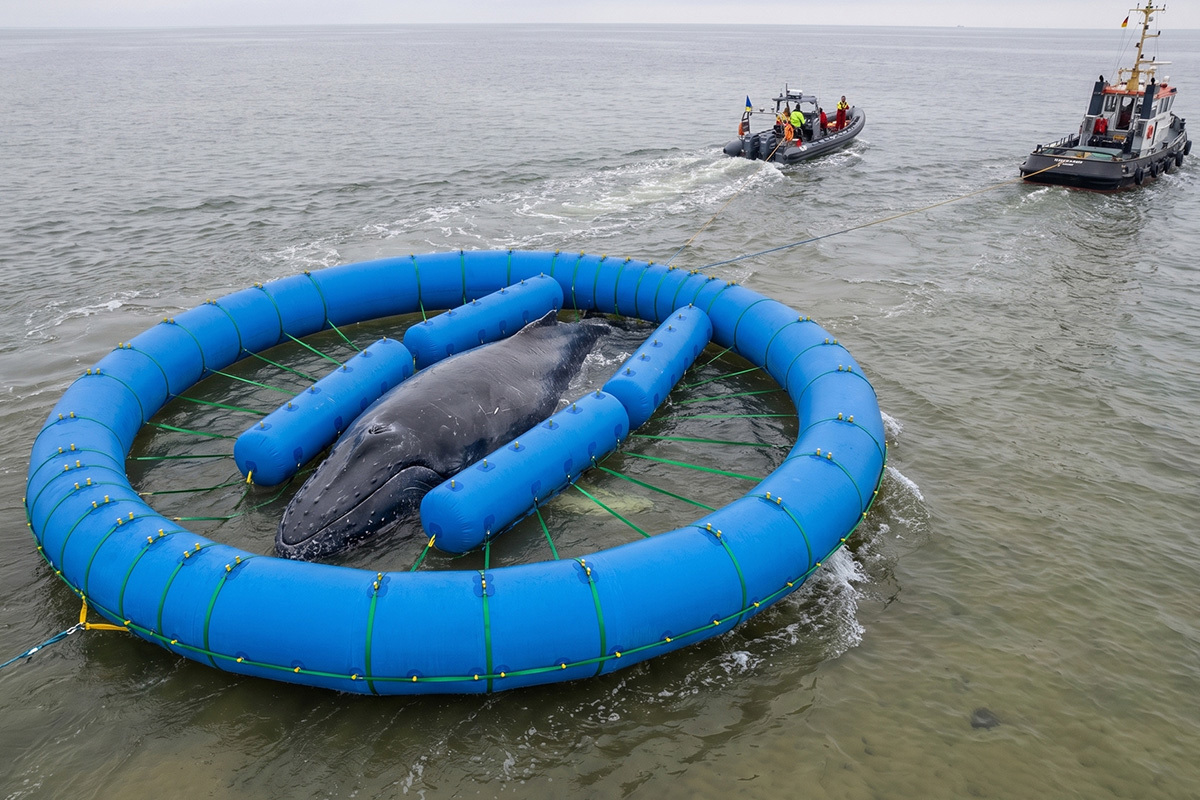
The concept shown on this page was created for the rescue effort of Timmy and demonstrates how a stable floating cradle can support, stabilize and potentially relocate a large marine animal in a more controlled way. At the same time, the underlying design principle goes beyond whale rescue. The same approach can also be relevant for other complex floating operations where controlled buoyancy, protection, safe access and predictable handling are essential.
Why this concept matters
In emergency marine rescue, conventional floating, lifting or towing methods are not always suitable for a vulnerable and irregularly shaped load such as a whale. A rescue operation requires much more than buoyancy alone. It requires shape retention, stability, controlled lift distribution, safer team access and a structure that can be managed step by step.
That is exactly where the Inflatable Rescue Cradle concept stands apart. Instead of relying on separate loose flotation elements, this concept creates one coherent floating system around the animal or object. That gives rescue teams more control during deployment, support, stabilization and possible relocation.
How the inflatable rescue cradle works
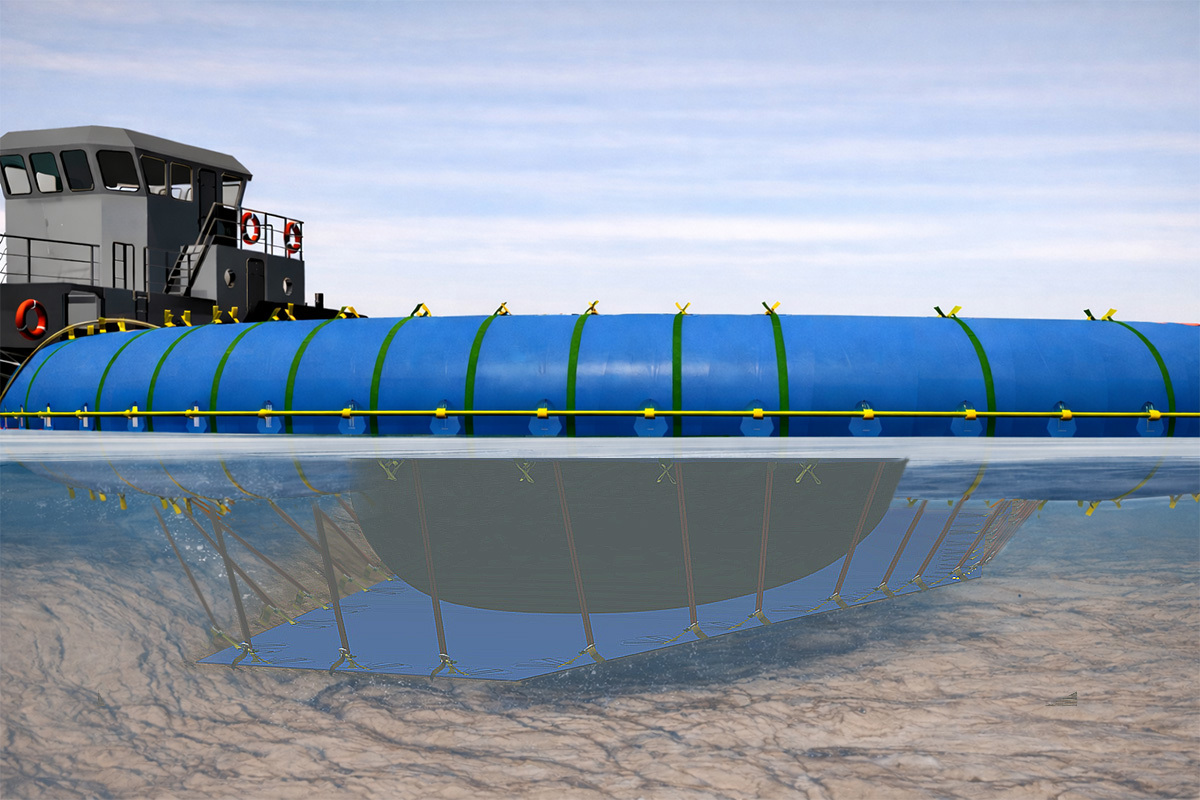
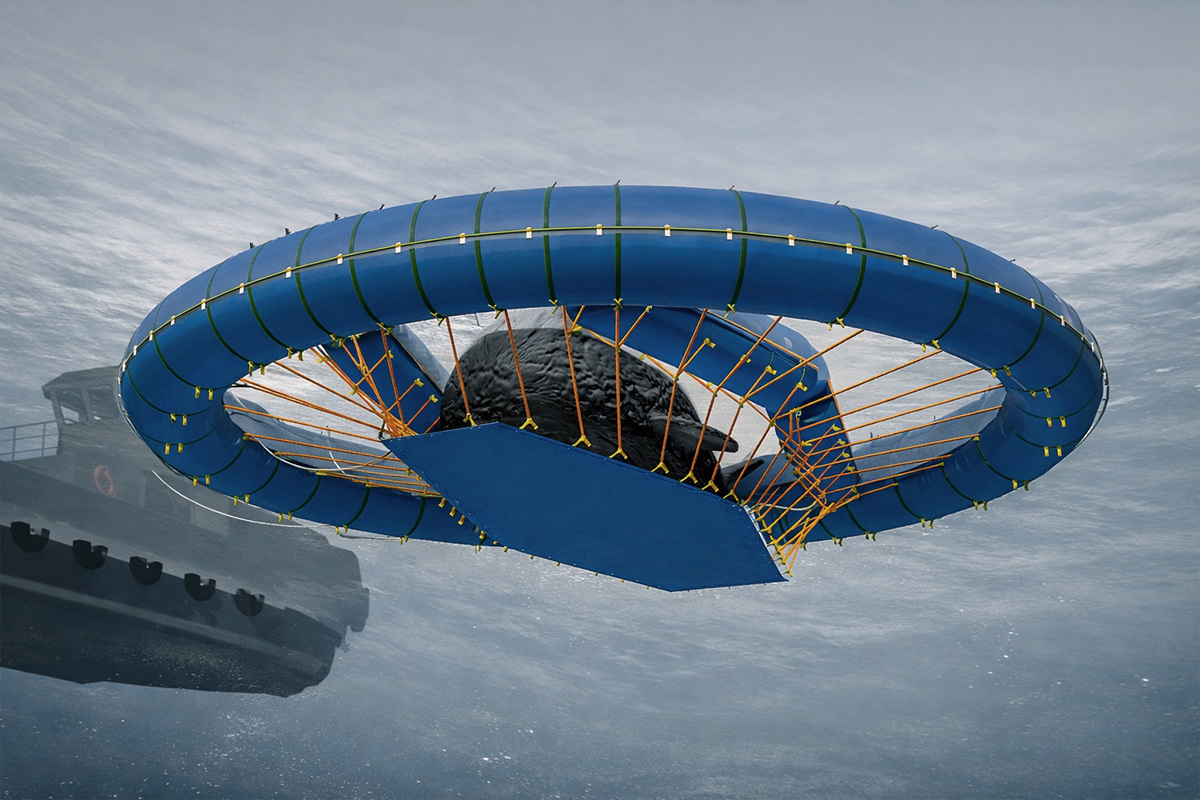
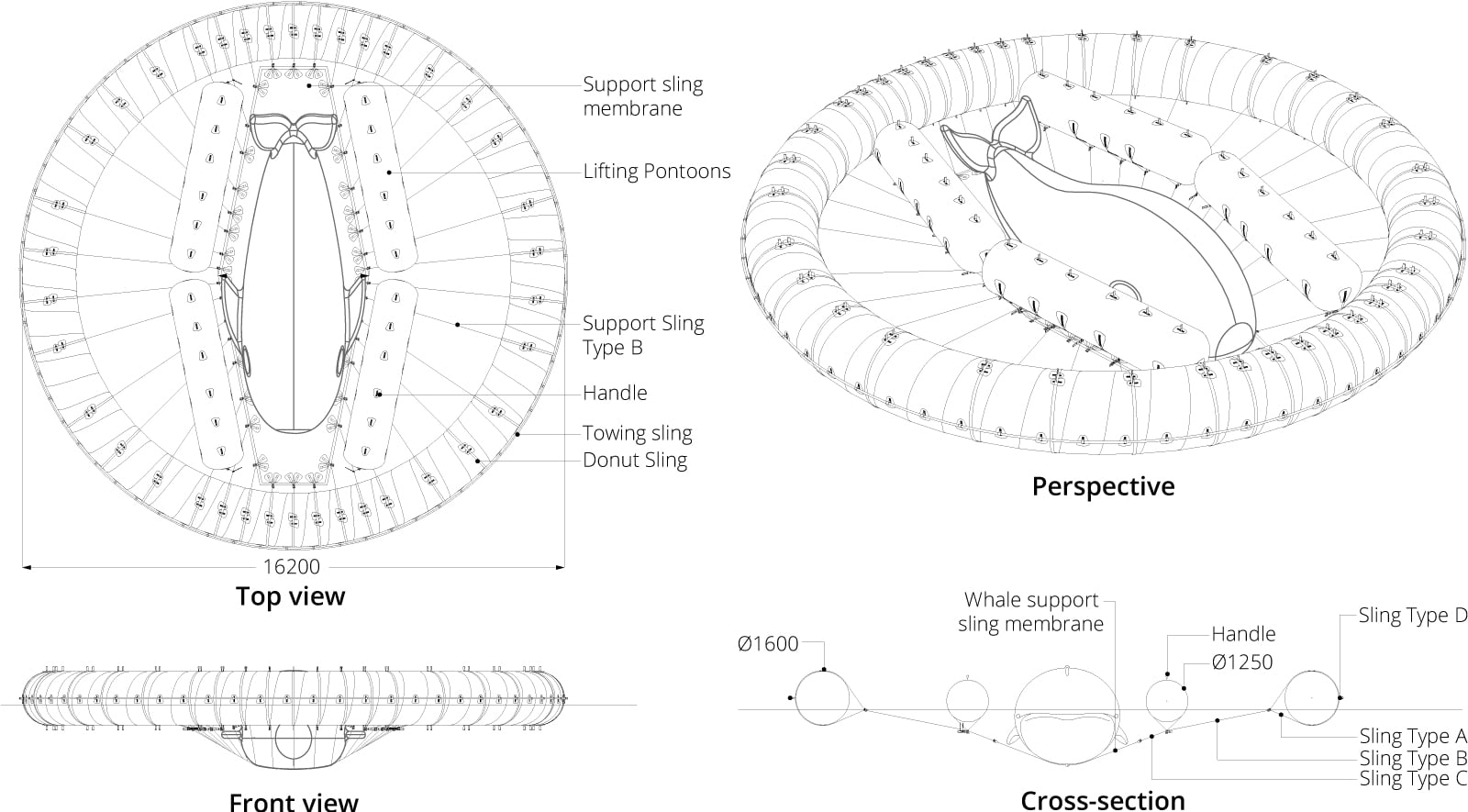
The rescue cradle is based on an integrated inflatable outer donut that forms the stable perimeter of the system. Inside this protected zone, a central support sling membrane carries the load, while additional internal flotation tubes provide controlled buoyancy, trim adjustment and extra stability.
Stable outer donut structure
The inflatable outer donut defines the geometry of the system and creates a stable working perimeter. It helps the cradle retain its shape, limits uncontrolled deformation and creates a more predictable floating platform around the animal or object being supported.
Central support membrane
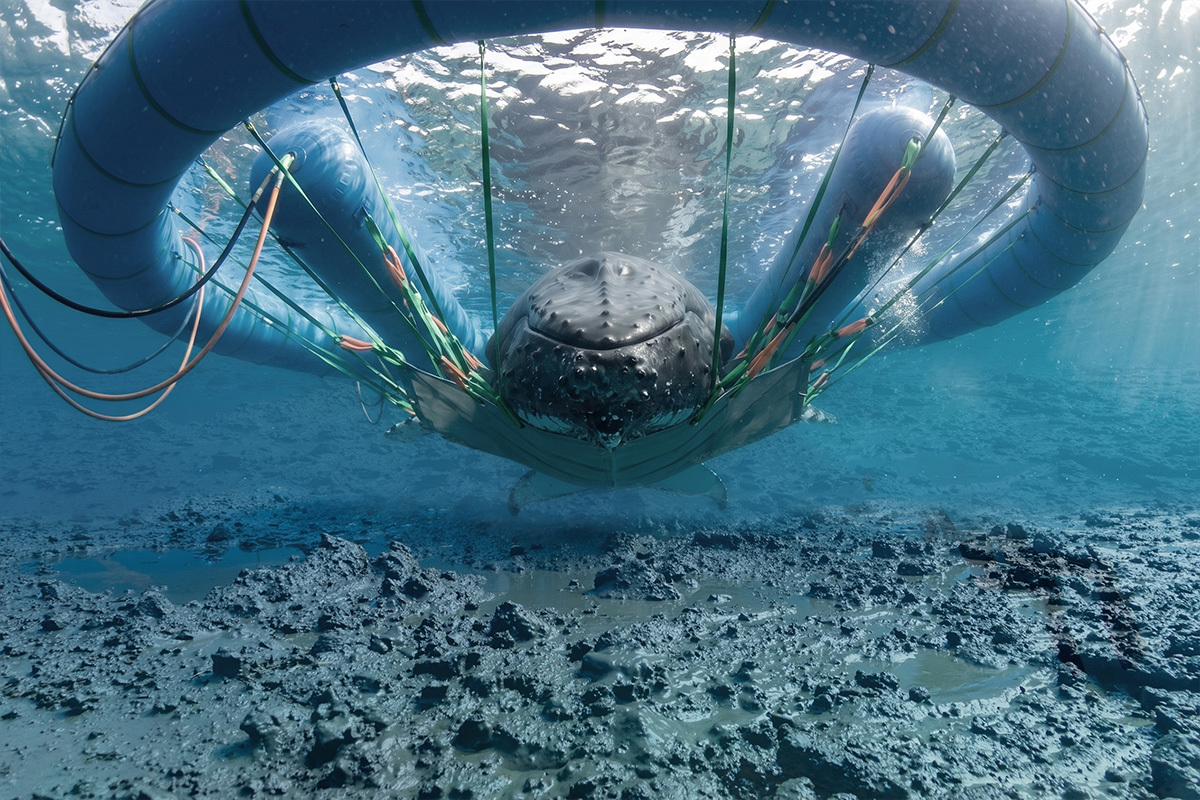
Inside the cradle, the support membrane carries the load in a more distributed manner than a simple lifting point solution. This helps reduce concentrated pressure and supports controlled floating rather than aggressive lifting.
Internal flotation tubes for tuning and trim
Additional internal flotation tubes provide extra support, allow staged inflation and help fine-tune the floating position. This makes it possible to adjust support distribution, roll stability and trim according to the operational scenario.
Phased deployment and handling
The concept can be deployed in phases. First, the outer donut is inflated to establish the basic geometry and protected work zone. Then the internal flotation elements can be pressurized and tuned step by step. Towing and positioning points can be integrated into the design so the cradle can be handled as one operational unit.
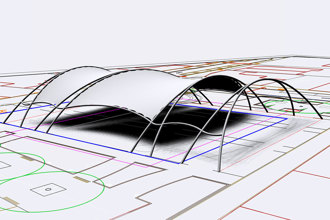
Technical Design & Drawings
Why a donut-based rescue cradle?
A donut-style floating cradle offers several key operational advantages:
- A stable, shape-retaining outer structure;
- A protected inner zone that provides controlled buoyancy and support;
- Less movement between separate flotation elements;
- Improved control during positioning and staged inflation;
- Safer access for rescue teams, divers, and veterinary staff;
- A single integrated floating system instead of multiple loose components.
This makes the concept particularly relevant when conventional lifting, towing, or floating methods are too unstable, too aggressive, or too difficult to control.
Expandable and modular
The base concept can be expanded according to the rescue method, water conditions, and support requirements. Possible extensions include:
Stability and support modules
- Anti-roll cushions for additional lateral stability;
- Head-support or body-support modules;
- Additional buoyancy chambers for lift distribution tuning.
Access and intervention modules
- Floating medical platforms for veterinary or rescue staff;
- Access pontoons or work platforms;
- Safer intervention positions around the supported animal or object.
Handling and control modules
- Custom towing points;
- Handling and positioning arrangements;
- Project-specific inflation and control layouts.
Since Buitink Technology develops these systems as custom-made inflatable structures, the design can be adapted to the dimensions of the whale, the object to be supported, local water conditions, and the operating method.
More than whale rescue
Although this concept was visualized for a whale rescue operation, the same design philosophy can also be applied to a wider range of controlled floating operations:
- Stabilization of large marine animals during rescue or treatment;
- Support of oversized or sensitive floating objects;
- Controlled salvage or recovery operations;
- Floating support during inspection, intervention, or transfer;
- Temporary protected work zones on water;
- Custom buoyancy systems for unusual marine or offshore challenges.
In essence, the inflatable donut concept is a versatile platform for situations where controlled support on water is more important than lifting capacity alone.
Designed and manufactured by Buitink Technology
Buitink Technology designs and manufactures custom inflatable structures, pontoons, floats, and technical textile solutions for demanding applications. The current website already highlights custom-made inflatable floats, marine buoyancy applications, related salvage concepts, and Buitink’s design and engineering capabilities. This page should therefore position the rescue cradle clearly as part of that same engineering approach, rather than as a stand-alone one-off visual concept.
The Inflatable Rescue Cradle concept reflects that same approach: practical, robust, modular, and designed for demanding real-world conditions.
Related solutions from Buitink Technology

Are you interested in this concept?
Would you like to discuss the concept of the inflatable rescue cradle, a related application for maritime rescue operations, or another custom-designed floating support solution?
Please contact Buitink Technology. We would be happy to work with you to find a suitable inflatable solution for your specific operational challenge.
The humpback whale Timmy is currently off the German coast in the Baltic Sea. The animal has repeatedly become stranded on a sandbar near the seaside resort of Timmendorfer Strand.
Questions?
Do you have questions or want more information? Please feel free to contact us. Call us at +31 (0)316-250830. But even easier: fill out the contact form below directly. We will contact you as soon as possible!
