


Helicopter bucket inspection and repair & testing
 Contact form
 +31 (0)316-250830
 Buitink Technology
Inspection, repair, testing and shell replacement of fabric firefighting buckets — brand-independent, carried out in the Netherlands.
Helicopter firefighting buckets work long days under harsh conditions: dipping in rivers and lakes, abrasion on rough riverbeds, UV, foam concentrate and thousands of fill-and-dump cycles. The fabric of the bucket — the shell — is the wear part, while head, cables and valve last much longer. Tears longer than 76 mm, broken top loops or separated welds mean, according to the manufacturer's repair criteria: immediately out of service.
At Buitink Technology you will find the textile competences to keep your buckets flying: inspection, repair, testing and complete shell replacement — carried out in our workshop in Duiven (the Netherlands) by specialists in high-performance technical textiles.
Buitink has developed and manufactured flexible structures from coated technical fabrics since 1948: from inflatable structures and lifting bags to flexible reservoirs of hundreds of thousands of litres. All relevant techniques are in-house: HF and hot-air welding, heavy-fabric manufacturing, webbing and cable work, and materials testing. We are ISO 9001 certified.
All brands
We work brand-independently: Bambi Bucket® and Bambi MAX®, but also Cloudburst, FAST, Monsoon-type and other fabric buckets. We are also happy to help with older or no longer supported models.
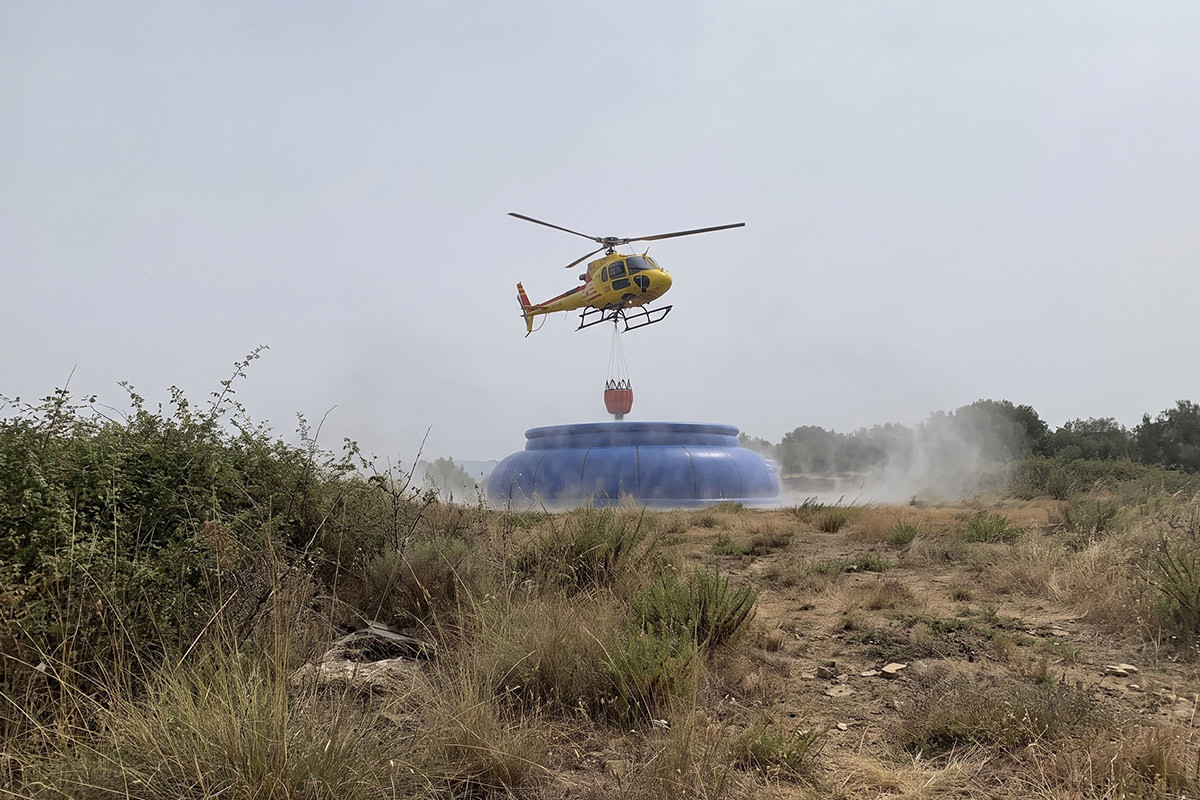
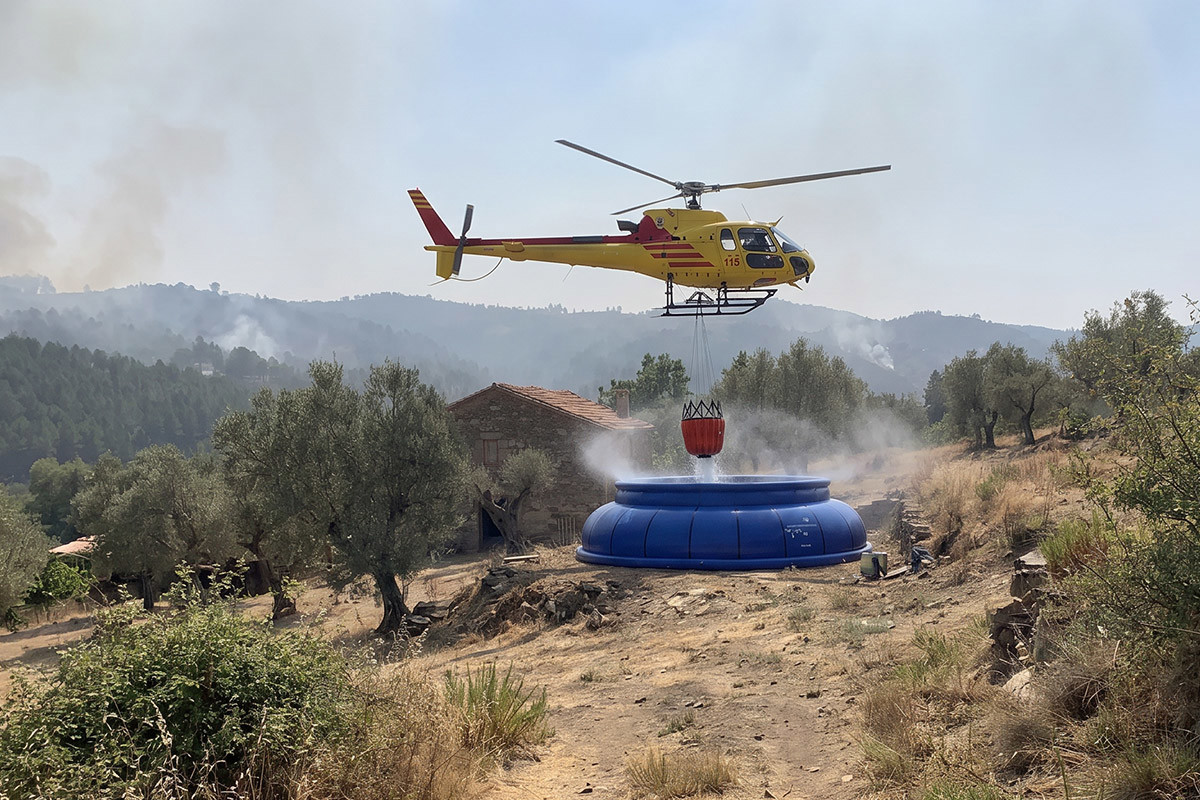
How do these systems work?
Maintaining firefighting buckets starts with understanding them inside out. All fabric buckets — from the classic Bambi Bucket® to the latest multi-drop valves — share one design principle: the weight of the water keeps the valve closed. The fuller the bucket, the harder the seal is pressed shut: a self-energising seal that costs no energy. The bucket itself is no passive bag either: when lifted from the water, pressure and battens tension the fabric, letting the pilot even control the load volume with the lifting speed ("variable fill").
Generation 1 — the fabric sleeve (single drop)
The classic bucket (since 1982) uses a second fabric sleeve, everted upward inside the bucket. Its mouth is squeezed shut by purse lines, and the pressure difference between the water outside and the air inside presses the sleeve flat — like a glove pushed under water. One steel cable (tripline) to a locked spring reel in the control head holds the sleeve up. When the pilot presses the button, a solenoid pulls the catch away and the water weight everts the sleeve through the bottom opening: the full load falls as one solid column. The spring reel retracts the empty sleeve — ready for the next dip. No motor, hardly any power, nothing to fail in the water.
Generations 2 and 3 — the sliding tube (multi drop)
More recent valves (Torrentula, Bambi MAX®) replace the sleeve with a rigid tube sliding vertically in a fixed cage of base ring, support rods and top plate. The tube sits like an upside-down glass over the bottom opening; when the motor lifts it, an annular gap opens all around and the water flows out. Because the tube moves parallel to the flow and the seal is a seat — contact only in the end position, no sliding friction — a small 24V motor operates the valve in under a second: steplessly (Torrentula) or in increments (Bambi MAX, "incremental valve control"). This lets the pilot drop partial loads, extend drops or split one load over several targets.
Other brands, same family
Buckets from other manufacturers — Cloudburst, FAST, Monsoon types — differ in execution, but the core is always the same: a load-bearing fabric structure, a self-energising seal and a valve that opens fast and controlled.
Inspection and mechanics
We inspect the complete bucket — fabric and mechanical parts:
Fabric and seams (shell)
- Full visual inspection of shell, panels and welded seams
- Check of top loops, webbing loops and wear strips against the manufacturer's repair criteria
- Assessment of coating (wear, UV damage, pinholes) and previous repairs
- Dimensional check of critical interfaces (valve opening, batten pockets, bracket positions)
Mechanical parts
- Suspension cables: fraying, kinks, swage fittings
- Chains, shackles and M-strap attachments
- IDS hub and spokes, shell brackets, restrainer cables
- Dump valve: function, sealing, purse lines, tripline
- Electrical: solenoid, wiring and connector (function test)
Every inspection results in a report with findings per component, classified by urgency, with a fixed quotation for the repair.
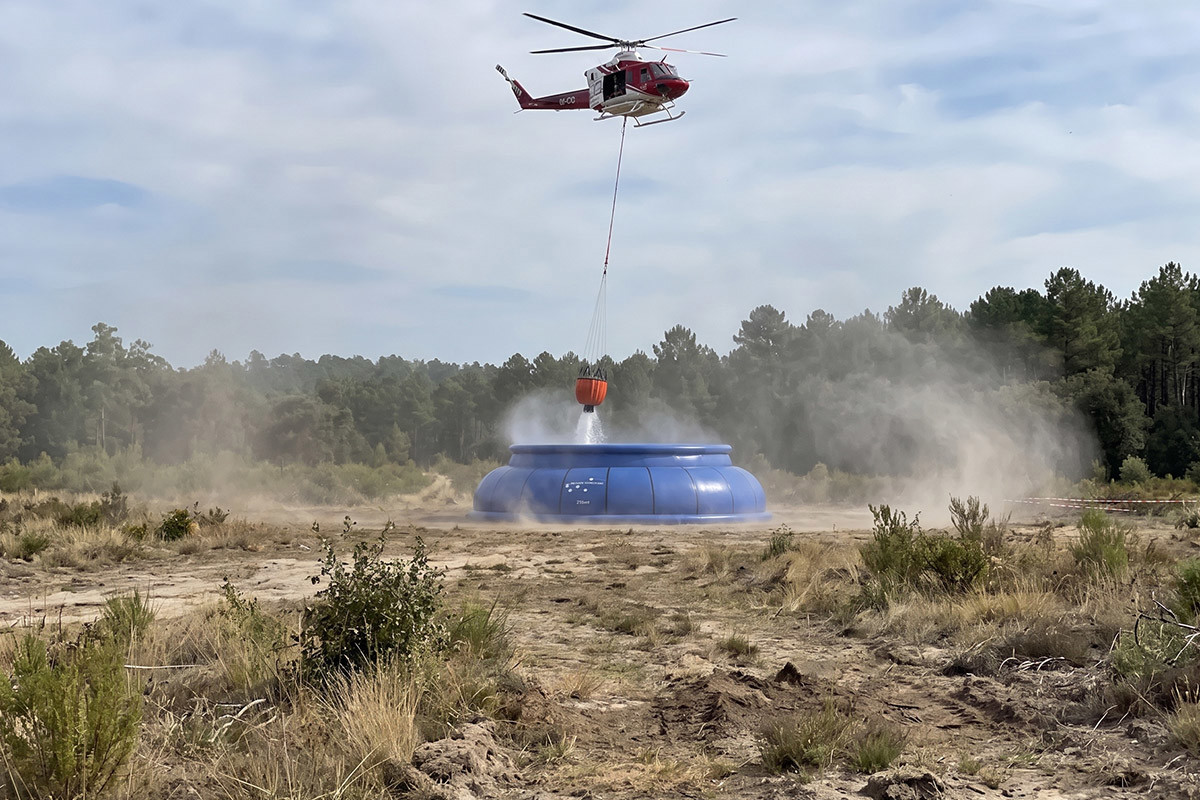
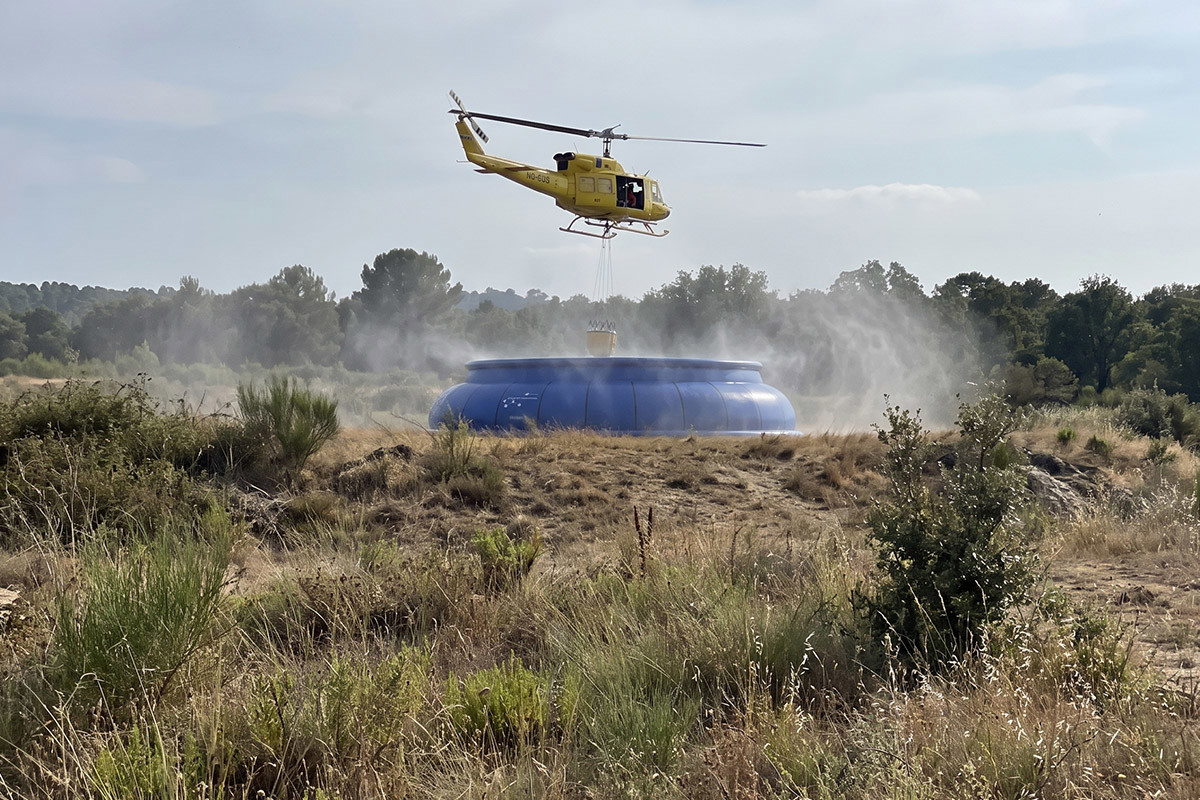
Repair and shell replacement
Repair
- Permanent patch repairs: hot-air welding (preferred method) or bonding, matched to the fabric type (PVC- or PU/TPU-coated)
- Repair of welded seams, batten pockets and wear strips
- Replacement of webbing, top loops, purse lines and small hardware
- Every repair is concluded with a tensile test on a co-welded test sample
Complete shell replacement
- Fabric worn out but head, cables and valve still good? Then a new shell is the economical choice.
- We measure your bucket and manufacture a replacement shell from modern TPU-coated fabric
- Your existing valve, head and hardware are transferred and adjusted
- Considerably more economical than a complete new bucket
Testing and quality control
Every bucket leaves our workshop with a test report. Depending on the assignment we perform:
- Tensile tests on fabric samples and welds on our own test benches (2.5 up to 300 kN)
- Breaking-strength checks of webbing, loops and attachments
- Leak and function test of the dump valve and seals
- Electrical function test of solenoid and controls
- Dimensional report of the critical dimensions after repair or replacement
All results are recorded per serial number, so the maintenance history of every bucket is traceable — including for your own quality and aviation records.
How it works
- Delivery by pallet or in our transport bag; we can arrange transport within Europe.
- Priority service during the fire season can be discussed.
- Inspection and report at a fixed price; repairs only after your approval of the quotation.
Would you like your bucket inspected, repaired or tested? Contact Buitink Technology at +31 (0)316 250 830 or [email protected].
Bambi Bucket® is a registered trademark of SEI Industries Ltd. Buitink Technology is not affiliated with SEI Industries Ltd. / DART Aerospace. Photos: Buitink Technology's own material.
Questions?
Do you have questions or want more information? Please feel free to contact us. Call us at +31 (0)316-250830. But even easier: fill out the contact form below directly. We will contact you as soon as possible!
