


Inflatable rain cover for ship loading
 Contact form
 +31 (0)316-250830
 Buitink Technology
Inflatable rain cover for ship loading — keep loading when it rains
Moisture-sensitive bulk does not go into a hold in the rain. Fertiliser, mineral concentrates, soda ash, sugar, salt, grain: at the first shower the hatches close and loading stops. Buitink Technology developed a self-supporting inflatable rain cover that spans the entire hatch opening, with a sealed pass-through for the loading spout or grab. No steelwork, no modification to ship or quay — on the hatch within an hour, and folded back onto a single pallet afterwards.
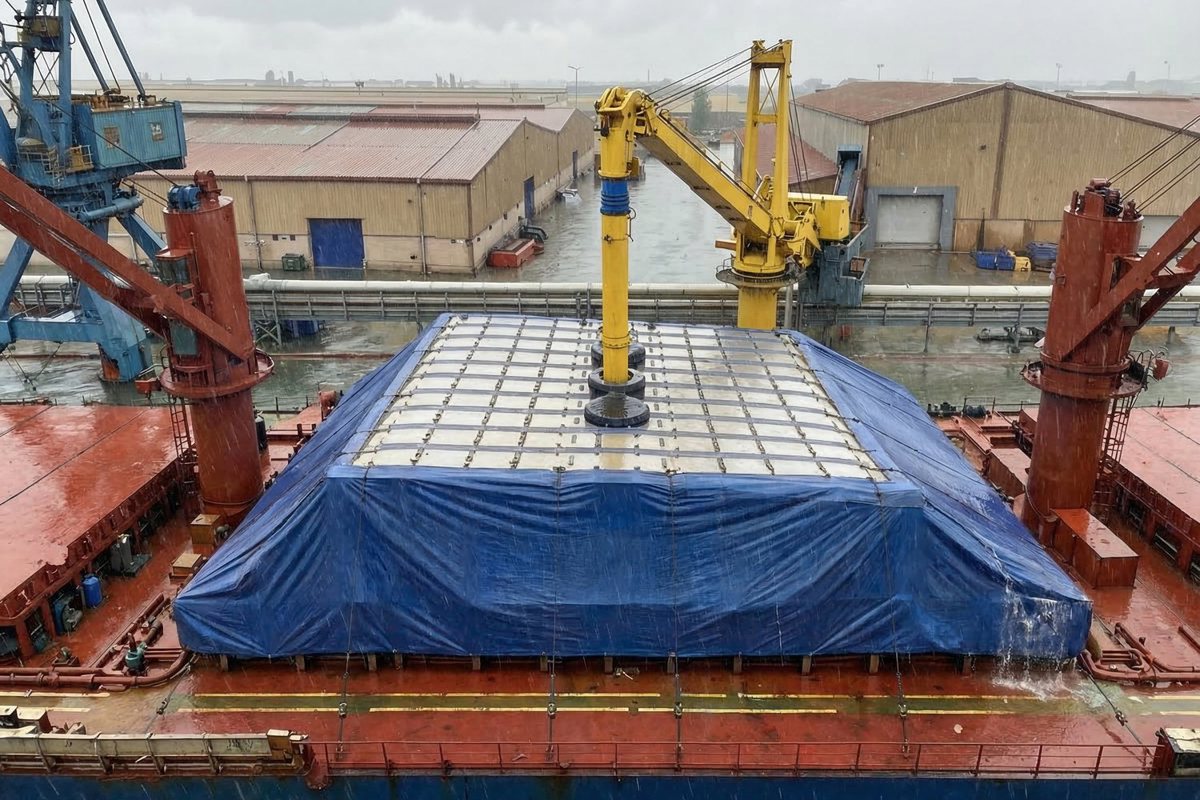
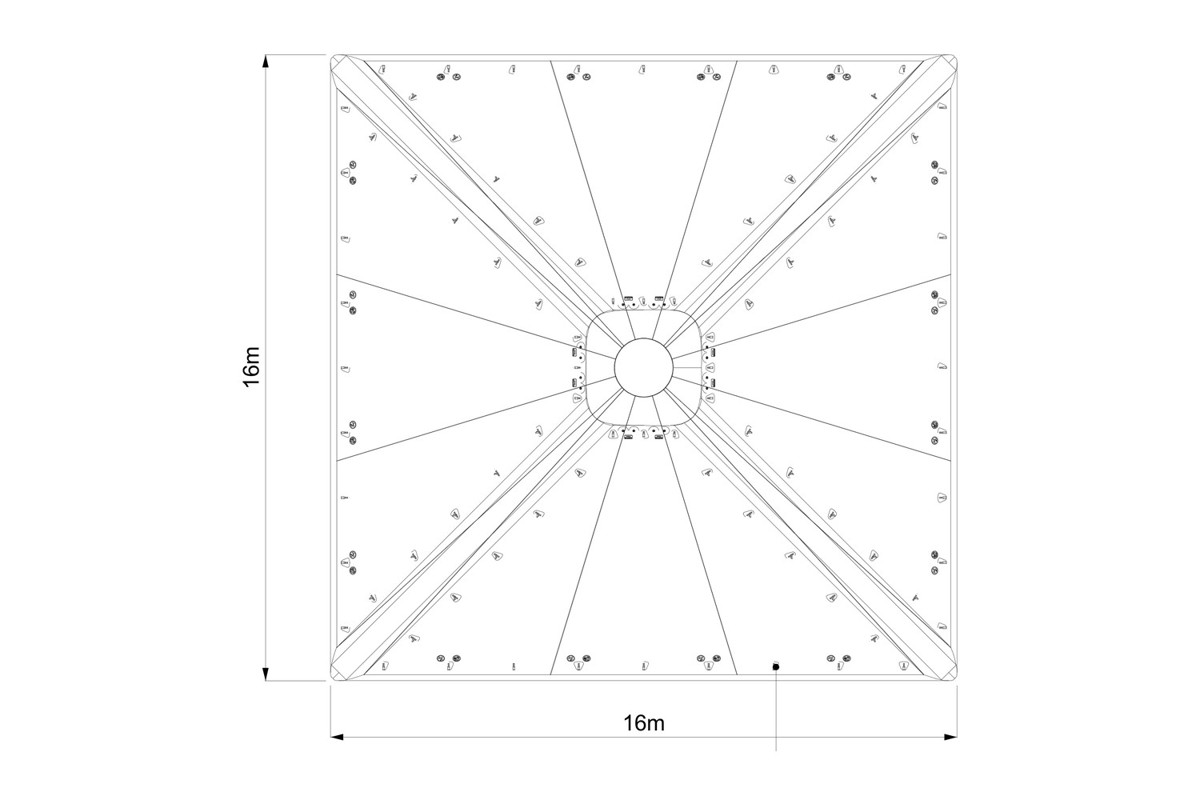
What you see on this page is one worked-out example of the principle: a pyramid cover of 16 × 16 metres, designed for one particular loading operation. Shape, size, material and operation are not fixed. We design the cover around your hatch, your loading spout and your way of working.
Rain does not cost loading hours, it costs loading days
For hygroscopic cargo, water is not an inconvenience but a quality risk. Fertiliser loaded wet cakes in the hold and will not discharge cleanly. Mineral concentrates and industrial salts go off-spec on moisture content. Grain, sugar and biomass are at risk of self-heating. Terminals therefore apply one simple rule: if it rains, the hatches close.
The bill arrives afterwards. The vessel sits idle and burns laytime; once laytime is exceeded, demurrage starts. The shiploader stands still while terminal costs continue, the berth schedule slips and the next call slips with it. Over a wet season this adds up to several days per voyage.
Each of the existing answers covers only part of the problem:
- a rain hood on the loading spout protects the stream, not the open hatch below it;
- tarpaulins handled by crane are slow, labour-intensive, sensitive to wind and put people on an open hatch edge;
- a covered berth or loading shed works very well, but is an investment of a completely different order and helps in one place only;
- waiting for dry weather is free to buy and expensive to use.
An air-supported cover over the whole hatch
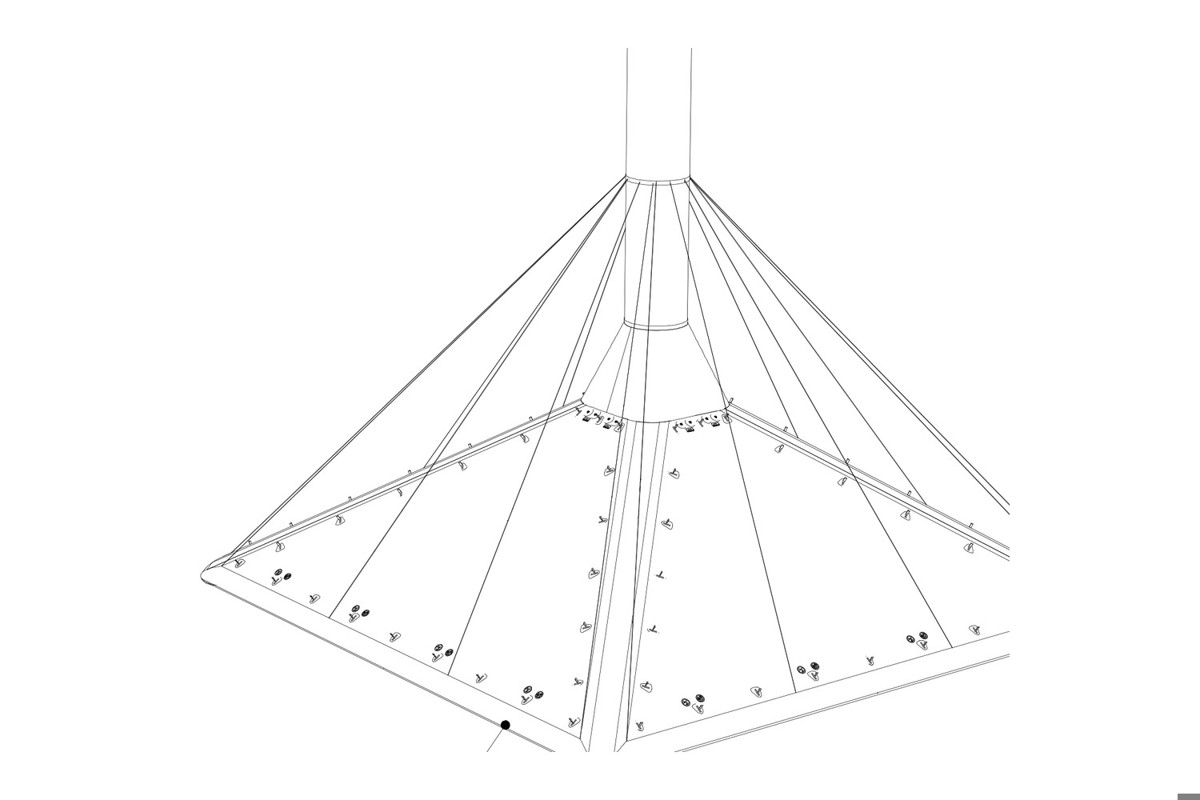
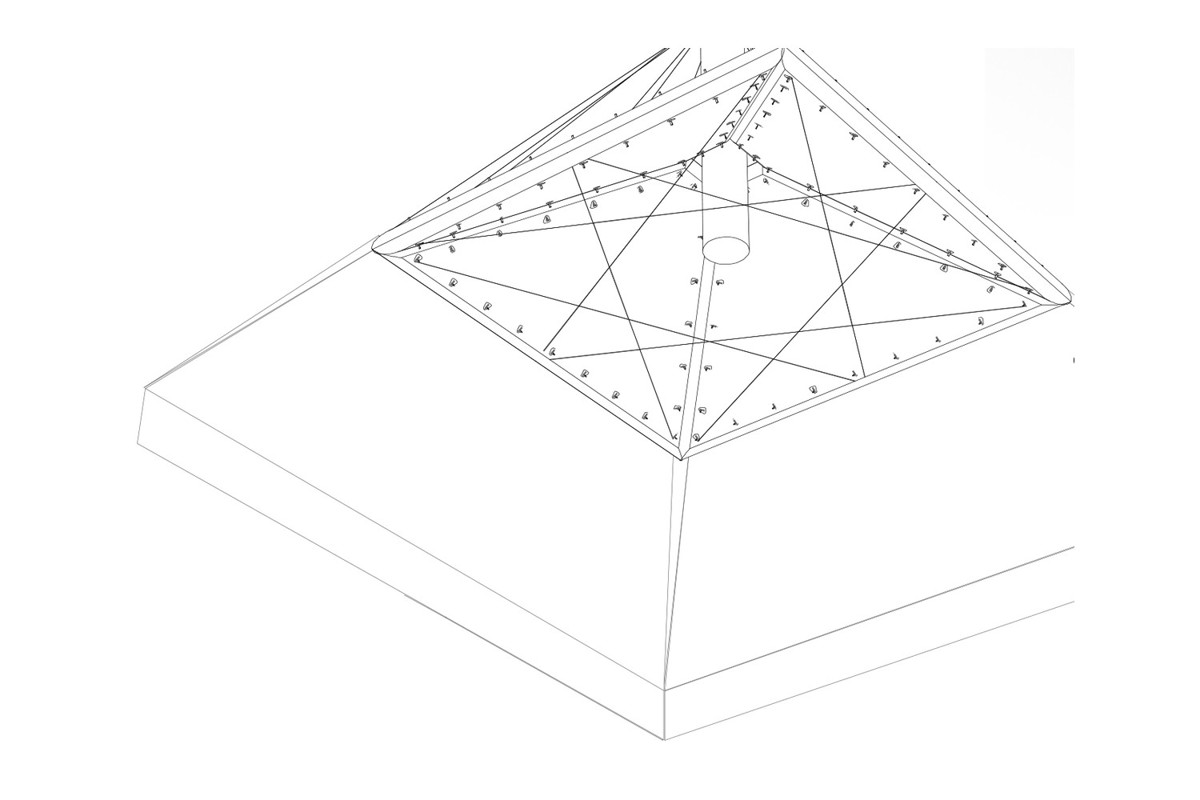
Our rain cover is an inflatable tent structure that is placed on the closed or partly opened hatch and erects itself as soon as air goes in. The roof consists of four inflatable panels of double-wall fabric meeting in a central ring. That ring carries the sealed pass-through through which the loading spout enters the hold. A skirt runs all the way round, shedding water outwards and sealing the cover against the hatch cover and coaming.
The distinctive part is the structure: there is no frame. The panels take their stiffness entirely from air pressure, in the same way as an inflatable boat or a drop-stitch floor. In the size engineered so far the cover therefore spans over sixteen metres clear, without a single steel beam above the cargo. That keeps it light enough to be moved by ship's crane or quay crane, and compact enough to store folded on a pallet.
What that means in practice:
- no modification to the vessel — the cover sits loose on the hatch and is tensioned to existing points;
- portable — it belongs to the terminal or to the cargo, not to one berth;
- fast — deployment and inflation in the order of an hour, striking it is quicker;
- reusable and repairable — the same fabric and welding technique we use in our lifting bags and flood barriers;
- scalable — the size follows the hatch, not the other way round.
From pallet to dry hold in five steps
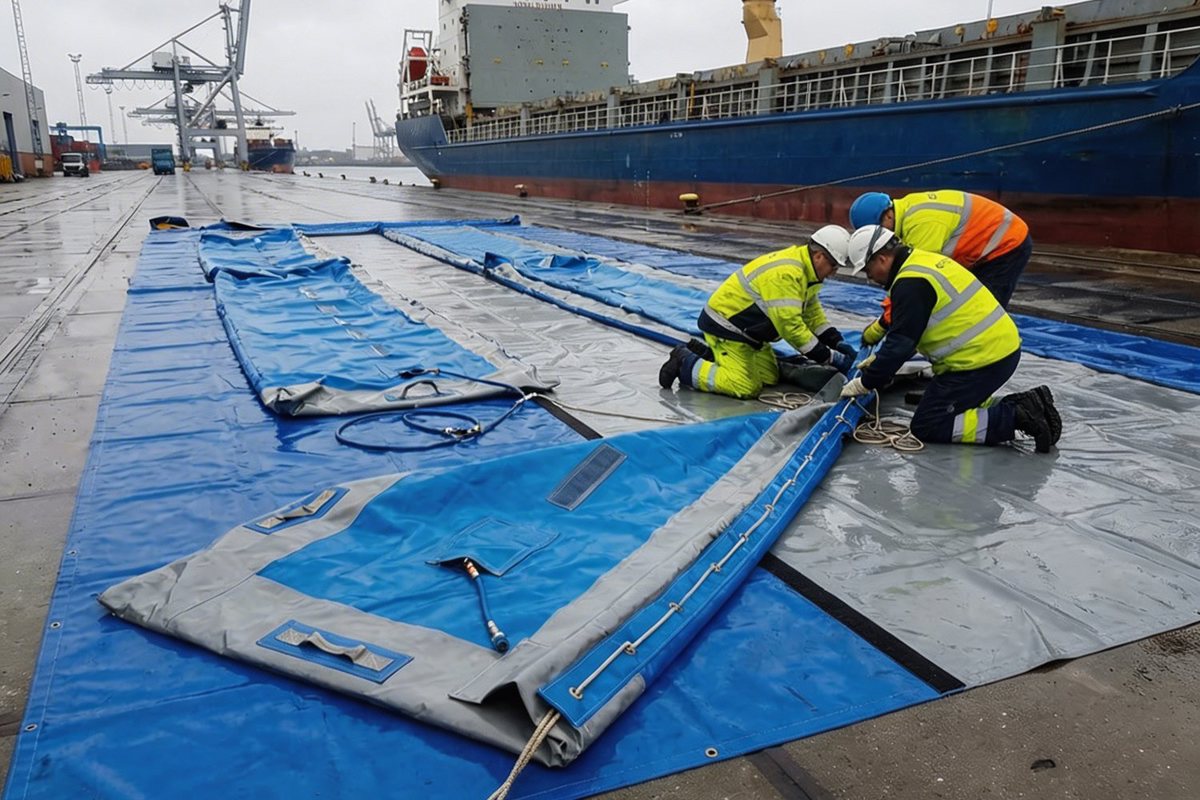
- Connect the modules. The panels are connected and sealed on the quayside. The position of the fill opening follows the vessel's loading plan. This is a one-off job per configuration.
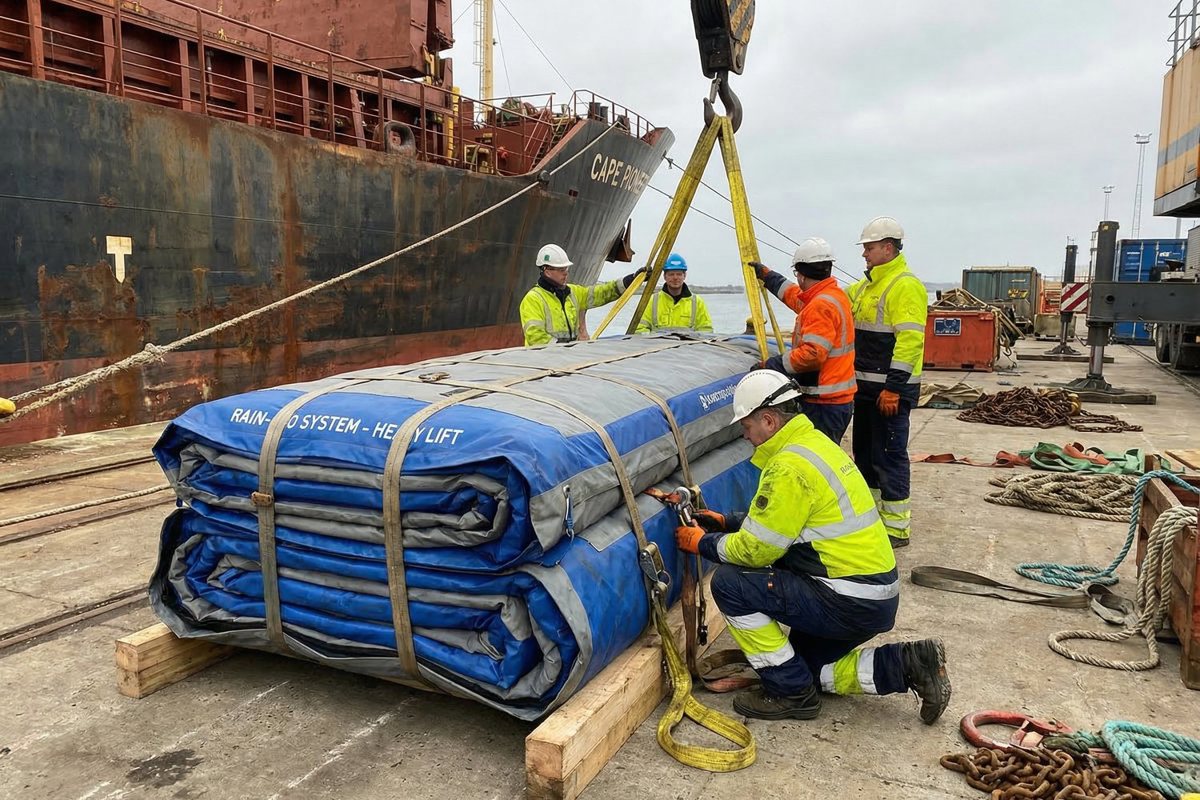
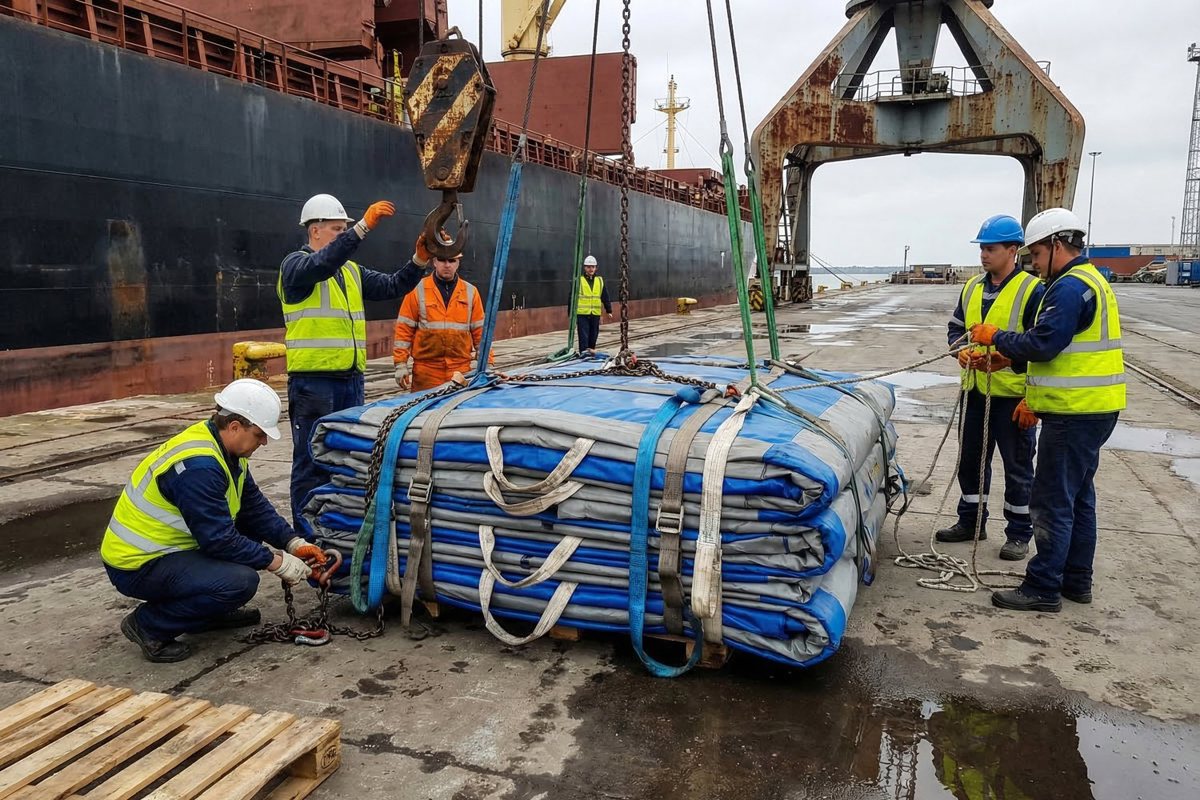
- Fold and rig for lifting. The assembled system is folded compactly onto a pallet and rigged for the lift.
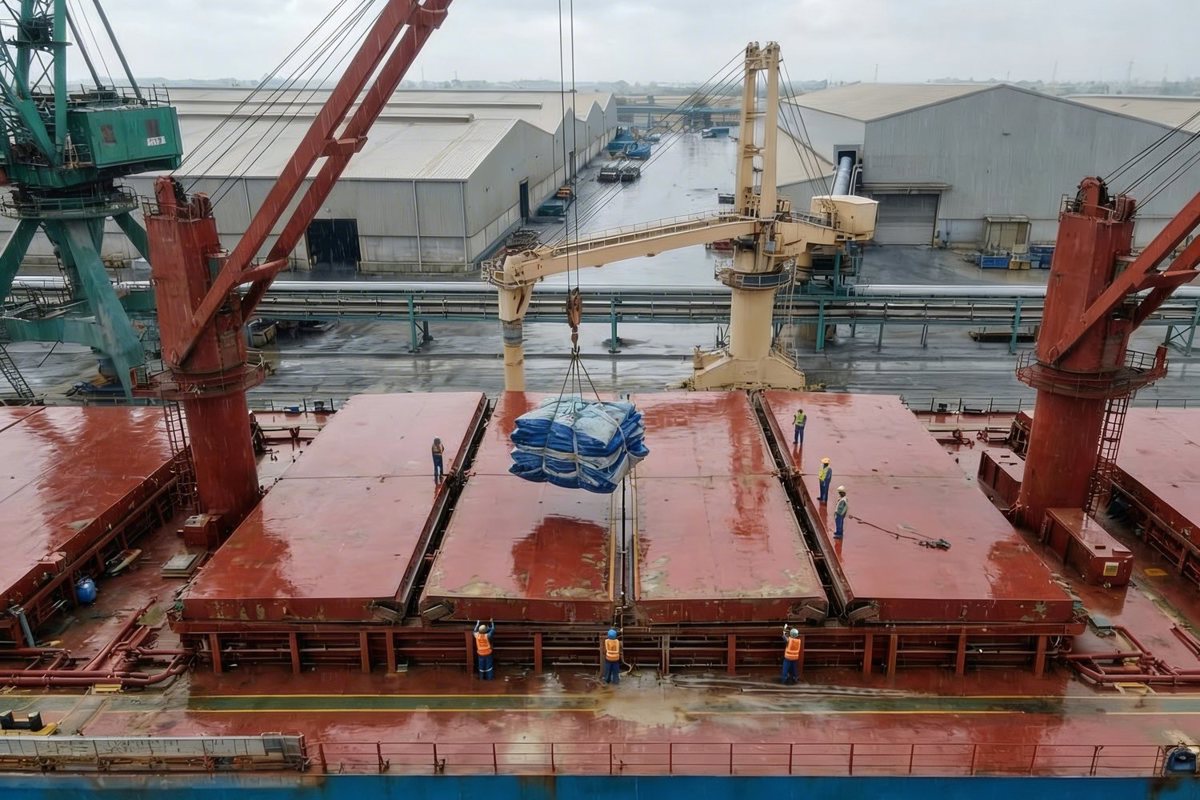
- Lift onto the hatch. The folded cover is hoisted onto the closed hatch by crane.
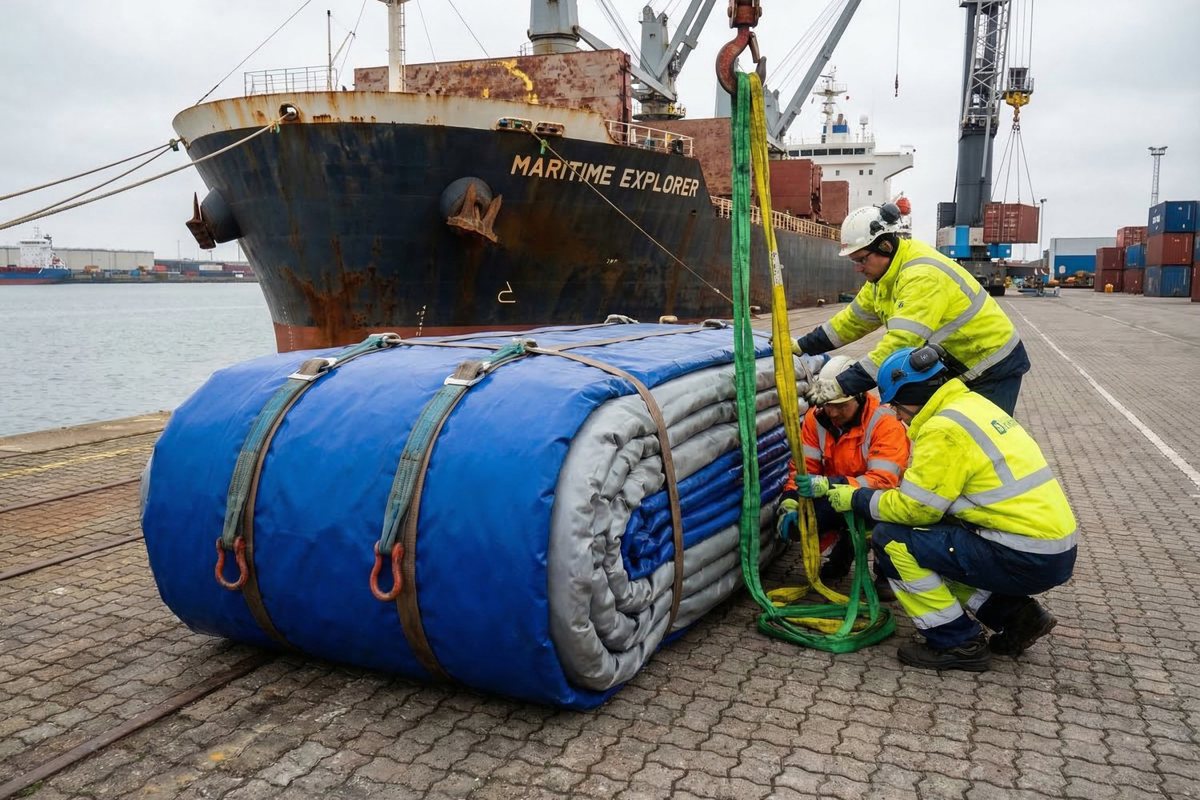
- Unroll and inflate. On deck the cover is unrolled — assisted by the crane where needed — and brought up to pressure. Under pressure the structure folds itself into shape.
- Secure and start loading. The skirt is tensioned, the loading spout passes through the ring and loading starts. Rain runs off the roof to the outside; the cargo stays dry.
Striking the cover takes minutes: the air system draws the panels down, so the cover goes flat onto the pallet again.
The engineering behind the cover
| Component | Design |
|---|---|
| Roof | Four inflatable panels in double-wall (drop-stitch) fabric, meeting in a central ring |
| Clear span | Over 16 m in the engineered design; other sizes on request |
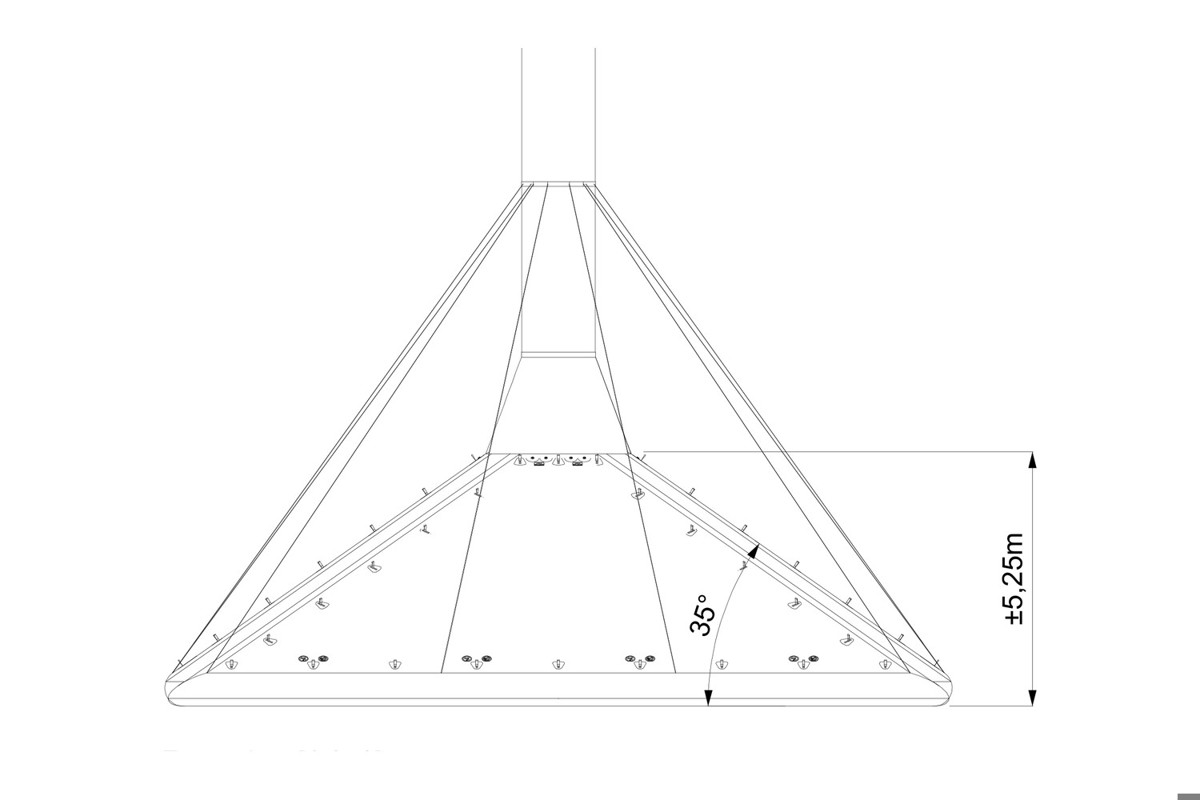
| Roof pitch | Approximately 35°, so rainwater runs off to the perimeter |
| Spout pass-through | Sealed central ring, watertight, fitted with lifting eyes |
| Skirt | Fabric skirt with integrated inflatable beams all round, tensioned to deck and coaming |
| Working pressure | Approximately 200 mbar in the roof panels, approximately 800 mbar in the skirt beams |
| Air system | Electric system with manifold for two pressure levels, inflation and extraction, pressure monitoring per circuit |
| Connections | Air hoses with quick-release couplings |
| Material | High-grade coated technical fabric, high-frequency welded; the same material family as our lifting bags |
| Storage | Folded on a pallet, reusable and repairable on site |
These values belong to one worked-out example, for a hatch of 16 × 16 m. Treat it as a starting point rather than a product specification: dimensions, shape, pressures, material and skirt design are set per application.
One example — almost any shape and size is possible
The cover on this page is a pyramid, because that shape shed the water best in that particular loading operation and suited a spout in the centre. But the underlying principle — a stiff, air-supported structure without a frame — can be built in many shapes. Think of:
- pyramid, ridged, barrel-shaped or a flat roof with a fall — depending on where the water has to go and how much free height there is above the hatch;
- rectangular, square or round footprints, asymmetric where the hatch is;
- any size — below ten metres is simpler and less expensive; above twenty metres we build up by adding modules;
- one or more pass-throughs, wherever your spout, chute or grab works;
- fully closed, or open on one or more sides so dust or heat can escape;
- openings other than a ship's hatch: a bunker inlet, a chute, a transfer point on the quay, a conveyor, an open storage bay;
- other fabrics: lighter and cheaper where it is only about rain, heavier and UV-resistant where the cover stands outside in the sun for years, antistatic where the product calls for it.
To make a proposal we do not need a finished specification: a few photographs of the loading operation, the hatch dimensions and an idea of how often and how quickly the cover has to go up and down. We work out the rest.
What it delivers
The case is easy to make with a terminal's own figures:
- how many hours a year loading is stopped by precipitation;
- what an idle vessel costs per day in demurrage and berth occupancy;
- which share of cargo claims traces back to moisture at loading.
Anyone loading in a wet climate, or in a season where rain is the rule rather than the exception, quickly arrives at a payback measured in a handful of loadings. For cargoes where a moisture claim affects the whole parcel the argument is even more direct: the risk disappears at source.
Designed, calculated and tested
The system grew out of a concrete question from a major international producer of moisture-sensitive bulk, who no longer wanted rain to dictate export loading. We developed the concept together with their engineers, from first sketch to complete design:
- structural analysis of the inflatable panels by a specialist external engineering consultancy, including behaviour under wind and self-weight;
- biaxial material testing of the double-wall fabric at an external test institute, to establish stiffness and elongation under two-axis loading;
- in-house tensile testing of the critical welded joints — the connection between panels and the attachment of the skirt — because that is where the largest forces meet;
- a full operating sequence and an air system that both inflates and extracts.
That is the core of our engineering and consultancy work: calculating load introduction in flexible structures, building and testing details before they go into a design, and turning a principle into a working system.
What the analysis showed
An air-supported cover of this size is not a tarpaulin. The question is not whether the fabric is strong enough, but whether the panel stays stiff enough under its own weight, wind and a layer of rainwater not to sag — and where in the fabric the stresses then concentrate.
Every panel was therefore analysed as a membrane model. Two results shaped the design:
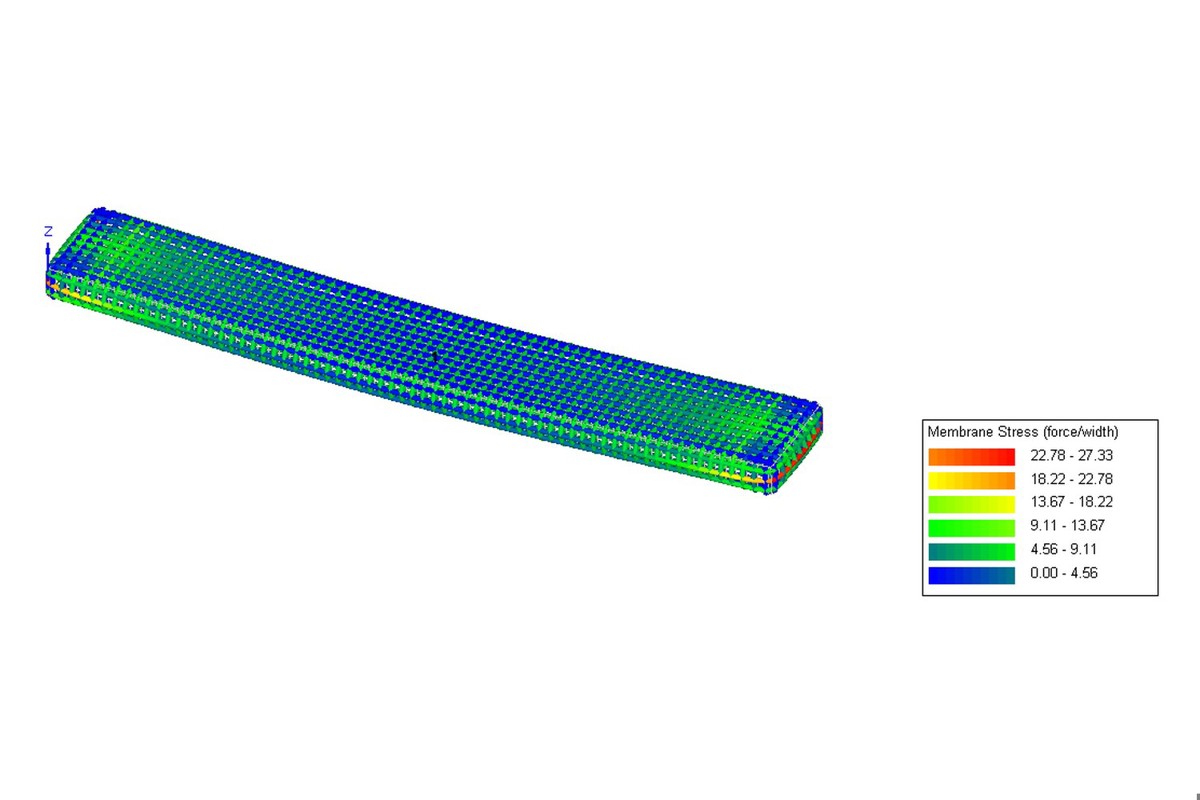
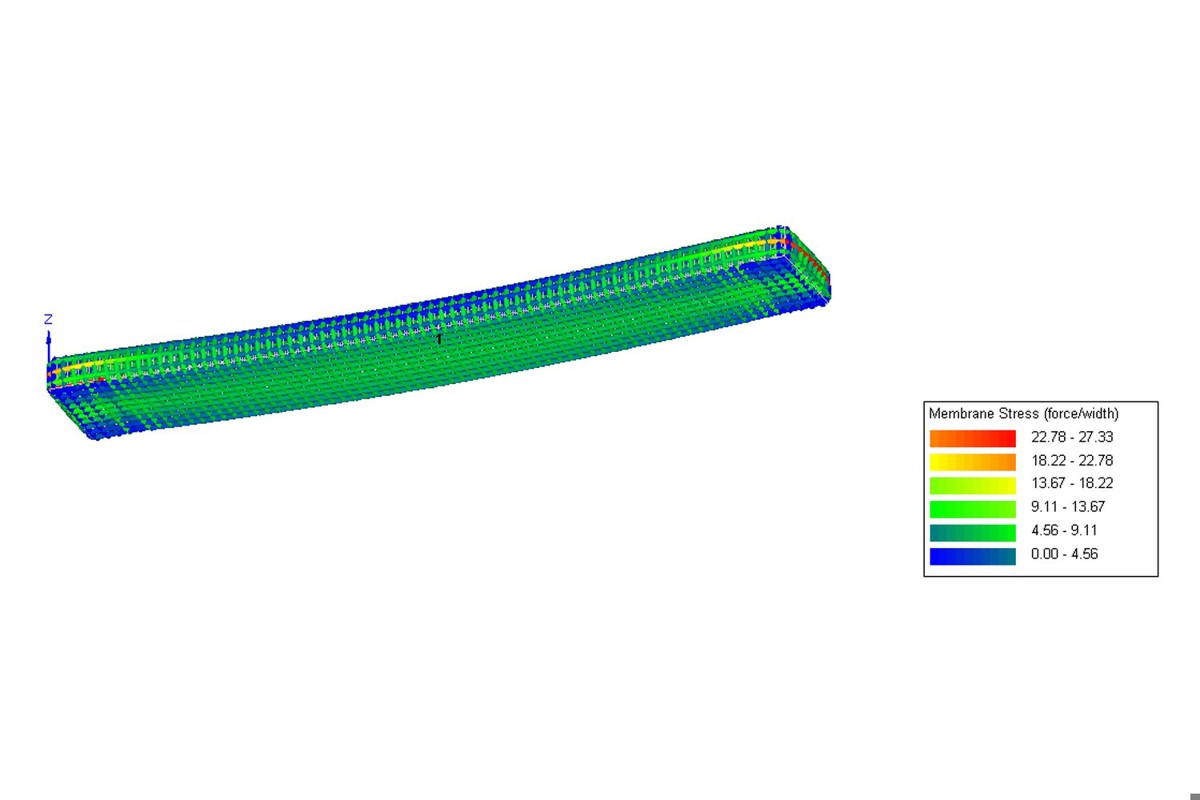
- The internal pressure is the structure. A panel of 17 × 2.5 metres, supported along its edges, carries a uniformly distributed water load of 20 millimetres at 200 mbar without sagging. At half that pressure the same panel does sag through. Working pressure is therefore not a detail but a design parameter, which is why the air system monitors pressure per circuit.
- The stress sits in the edges. In the model the membrane stress stays low over nearly the whole panel surface (blue and green in the plots alongside); it rises sharply only along the edges and at the joints. That is exactly where we adapted the design: the edge detailing and the joint between panels were made heavier and separately tensile-tested, and the skirt is designed to take the tensile loads into its own surface before they reach the edge of the inflatable panel.
That is how our engineering works: calculate first, then build and test the details, and only then produce.
Status of the design. The rain cover is fully engineered and the critical details have been tested. We will build and test the first system in close cooperation with the first user: dimensions, the position of the fill opening and the operating sequence are set together with the terminal. The images on this page are design impressions of one possible execution, meant to show the principle — not to prescribe a shape or a size.
Which cargoes and which vessels
The cover is of interest wherever the cargo must not get wet and the vessel must not wait:
- fertiliser and fertiliser raw materials — urea, ammonium nitrate, DAP and MAP, potash, phosphate rock;
- mineral concentrates and ores with a moisture specification or a transportable moisture limit;
- industrial salts and soda ash;
- sugar, grain, feed raw materials and wood pellets;
- cement, lime and other bound powders;
- project cargo and break bulk that has to stay dry during loading.
On the vessel side we are aiming at bulk carriers and general cargo ships with hatch openings in the order of 10 to 20 metres. Larger hatches are possible by adding modules; smaller hatches are simpler and less expensive.
FAQs
Does the vessel have to be modified for the rain cover?
No. The cover sits loose on the hatch and is tensioned to existing points on deck and coaming. No steel structure goes on board and nothing is welded or drilled.
How long does deployment take?
Lifting, unrolling and inflating takes in the order of an hour. Deflating and folding is quicker. Connecting the modules is a one-off job per configuration and is done on the quayside.
Can loading continue through the cover?
Yes, that is what the system is built for. The central ring carries a sealed pass-through for the loading spout; its position follows the loading plan.
What happens in strong wind?
The cover is calculated for wind loading and is tensioned all round. As with any loading operation there is a wind limit; we set that per application in the operating instruction.
Is the system reusable?
Yes. The cover is stored folded on a pallet and can be repaired on site, using the same materials and welding technique as our lifting bags and flood barriers.
Which hatch sizes are possible?
The worked-out example spans over sixteen metres clear. By adding or leaving out modules we follow other hatch sizes; we always build the cover to suit the vessel.
Does it have to look exactly like the one on this page?
No. This is one execution for one loading operation. Pyramid, ridged, barrel-shaped or a flat roof with a fall, rectangular or round, large or small, one pass-through or several: the principle stays the same and the shape follows your situation. The same technique works for openings other than a ship's hatch — a chute, a bunker inlet, a transfer point on the quay.
Do you load moisture-sensitive bulk in a wet climate?
Then we would be glad to think along from the first sketch. Send us the hatch dimensions and a photograph of your loading operation, and we will tell you what is possible in your situation and roughly what it costs. Email [email protected] or call +31 (0)316 250 830.
Questions?
Do you have questions or want more information? Please feel free to contact us. Call us at +31 (0)316-250830. But even easier: fill out the contact form below directly. We will contact you as soon as possible!
